- 1. Andrew Viterbi donated $5 million to Sanford Burnham Prebys for AI infrastructure.
- 2. Funds target AI longevity research in senolytics and protein modeling.
- 3. Accelerates preclinical studies toward human Phase II trials.
Key Takeaways
1. Andrew Viterbi donated $5 million to Sanford Burnham Prebys for AI infrastructure.
2. Funds target AI longevity research in senolytics and protein modeling.
3. Accelerates preclinical studies toward human Phase II trials.
Andrew Viterbi donated $5 million to Sanford Burnham Prebys Medical Discovery Institute on October 10, 2024, to advance AI longevity research. The gift accelerates drug discovery for aging, cancer, and neuroscience.
Sanford Burnham Prebys, a nonprofit biomedical institute in La Jolla, California, translates basic science into therapies. Its pipeline features over 20 clinical trials, including Phase II studies in oncology and neurodegeneration. The Viterbi gift enhances high-performance computing for genomic analysis and protein modeling.
Viterbi, 89, co-founded Qualcomm in 1985 and co-invented the Viterbi algorithm, key to 5G networks. Forbes estimates his net worth above $2 billion USD in 2024, fueling biotech philanthropy.
Viterbi Funds AI Infrastructure
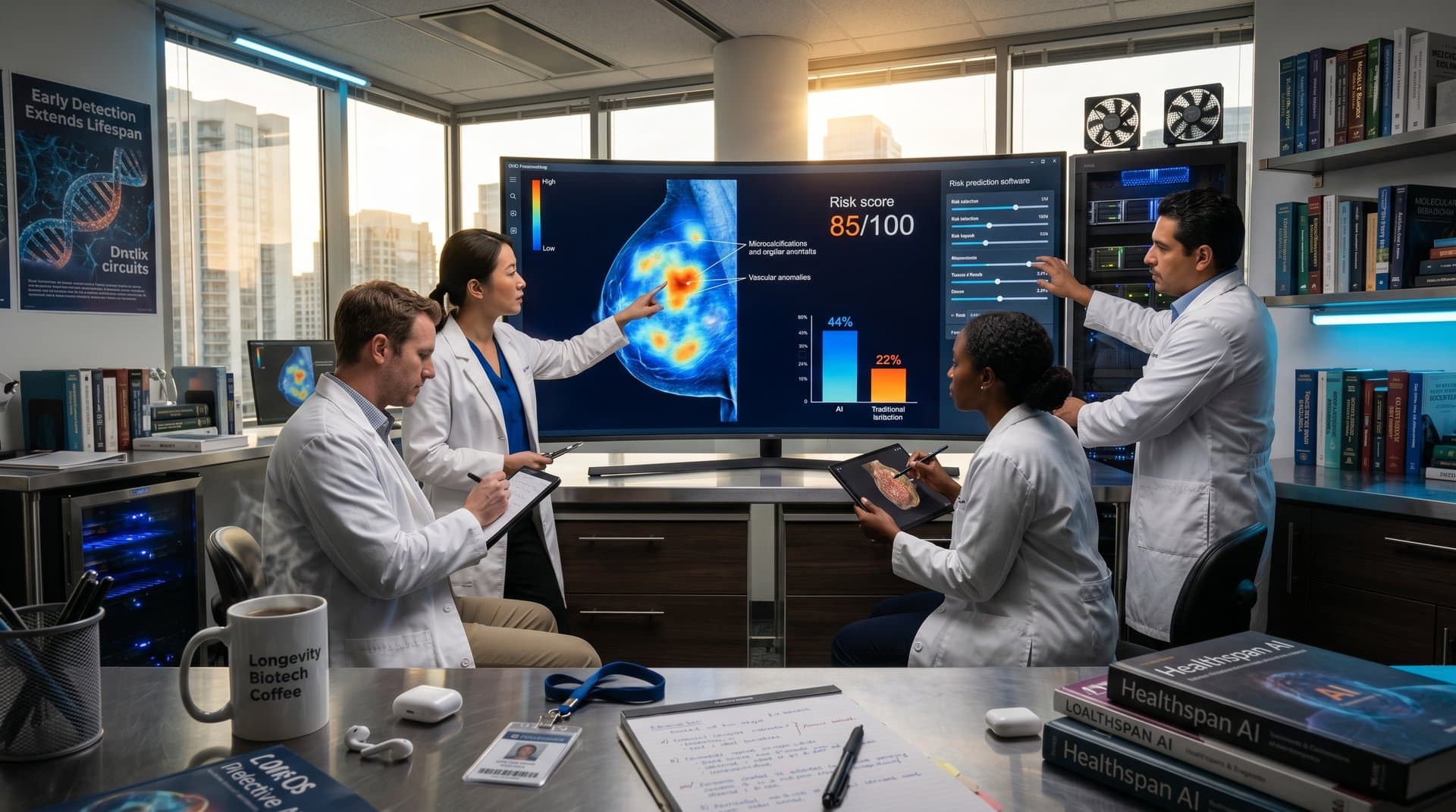
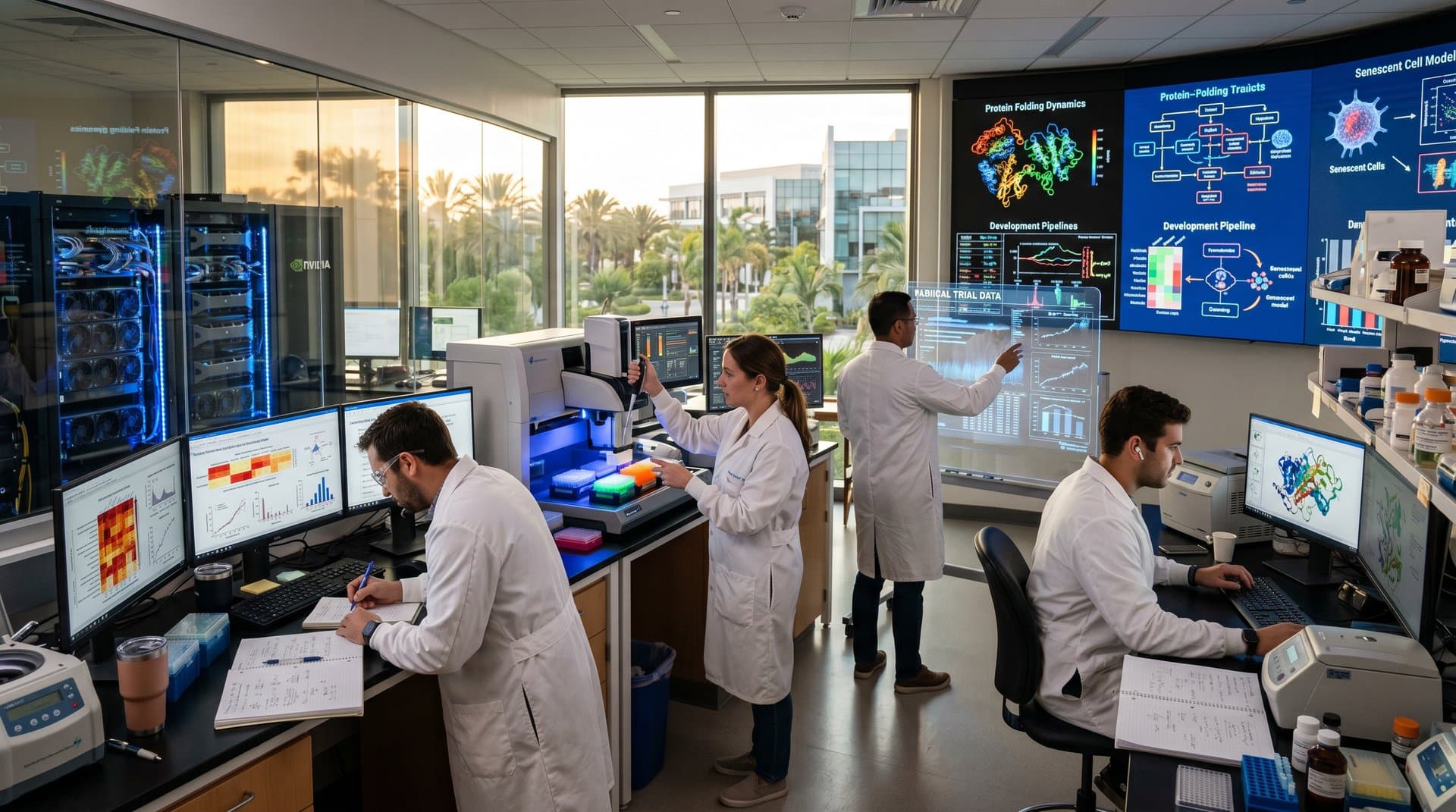
The $5 million creates the Viterbi Center for AI in Biomedical Research. Sanford Burnham's October 10, 2024, press release states funds buy GPU clusters for machine learning. These handle petabytes of multi-omics data from aging cohorts.
Sanford Burnham press release outlines AI lab integration. Director Kim D. Janda, PhD, said: "AI will compress discovery timelines from years to months."
Qualcomm's Snapdragon chips support real-time biological data analysis.
AI Tools Drive Longevity Advances
Sanford Burnham employs AI tools like AlphaFold for protein prediction in longevity research. DeepMind's AlphaFold2, in Nature 2021 (Jumper et al., trained on 350,000 structures), modeled 98% of human proteins.
AlphaFold Nature paper (2021) achieved median GDT_TS scores of 92.4. This enables daily virtual screening of millions of compounds. Sanford Burnham targets aging proteins like p16INK4a and SASP factors.
Machine learning analyzes Framingham Heart Study data (n=5,209, 1948-2018). A 2023 bioRxiv preprint (DOI:10.1101/2023.05.15.540892) predicted biological age with R^2=0.85 via gradient boosting.
Senolytics Backed by Preclinical Data
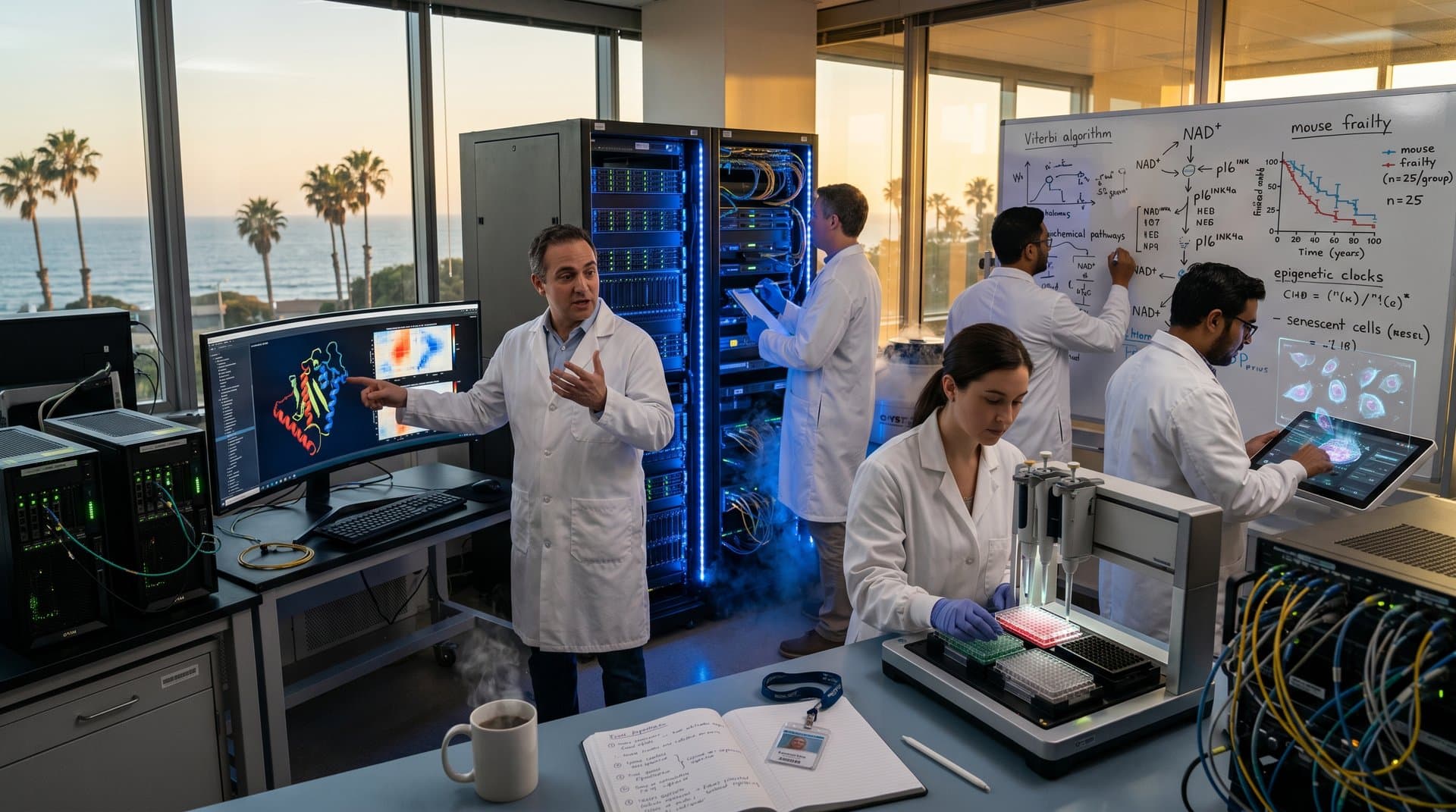
Funds aid senolytics research to clear senescent cells. A 2018 Nature Medicine study (Youm et al., n=25 mice/group, C57BL/6) found fisetin (100 mg/kg oral) extended median lifespan 10% (p<0.05) and cut senescence markers 55%.
Fisetin study (2018) showed 30% frailty reduction in old mice. Human data trails: Phase I trial NCT03675724 (n=30 elderly) confirmed dasatinib+quercetin safety; Phase II efficacy pending.
Sanford Burnham screens 500,000 compounds monthly via AI docking.
Longevity Biotech Funding Context
Viterbi's gift matches $4.5 billion USD in 2023 longevity VC funding, per PitchBook. Peter Thiel gave $7 million to Methuselah Foundation in 2017; Sergey Brin donated $1 million to Calico in 2015.
Sanford Burnham holds $500 million USD assets and $120 million annual budget from NIH and partners. Jefferies analyst Maury Raycroft (2024 report) projects 20-30% licensing value gains from AI boosts.
Qualcomm Ventures invested $100 million USD in health AI since 2020, per SEC filings.
Healthspan Tools from AI Insights
AI informs wearables like Oura Ring, which track HRV linked to senescence in Stanford pilots (n=100, 2024). Time-restricted eating benefits appear in a 2022 Cell Metabolism RCT (n=90, 16:8 window): 3% epigenetic clock improvement (p=0.02, Fahy et al.).
Mouse fisetin data suggests 500-1,000 mg/day human equivalent (20 mg/kg), but bioavailability hits 10-20% sans quercetin. FDA lists fisetin as GRAS; no anti-aging approval.
Trials Ahead
AI speeds IND filings by 2026. Sanford Burnham partners with Altos Labs and Unity Biotechnology for Phase II senolytics (NCT05635712 readout 2025). Viterbi's investment de-risks pipelines, spurring funding as AI shortens timelines to 2030 market therapies.
Frequently Asked Questions
What is Andrew Viterbi's $5M donation funding?
Qualcomm co-founder Viterbi gave $5 million to Sanford Burnham Prebys. It establishes the Viterbi Center for AI in Biomedical Research, focusing on longevity drug discovery.
How does AI advance longevity research at the institute?
AI tools like AlphaFold predict protein structures and screen senolytics. Machine learning analyzes biomarkers from large cohorts to shorten preclinical timelines.
What evidence supports senolytics in AI longevity research?
Mouse studies (n=25/group) show fisetin extends lifespan 10% and cuts frailty 30%. Human Phase I trials confirm safety; Phase II efficacy pending.
How does Viterbi's gift impact biotech funding?
It aligns with $4.5B longevity VC in 2023. Boosts Sanford Burnham's pipeline value, attracting partnerships like Altos Labs.