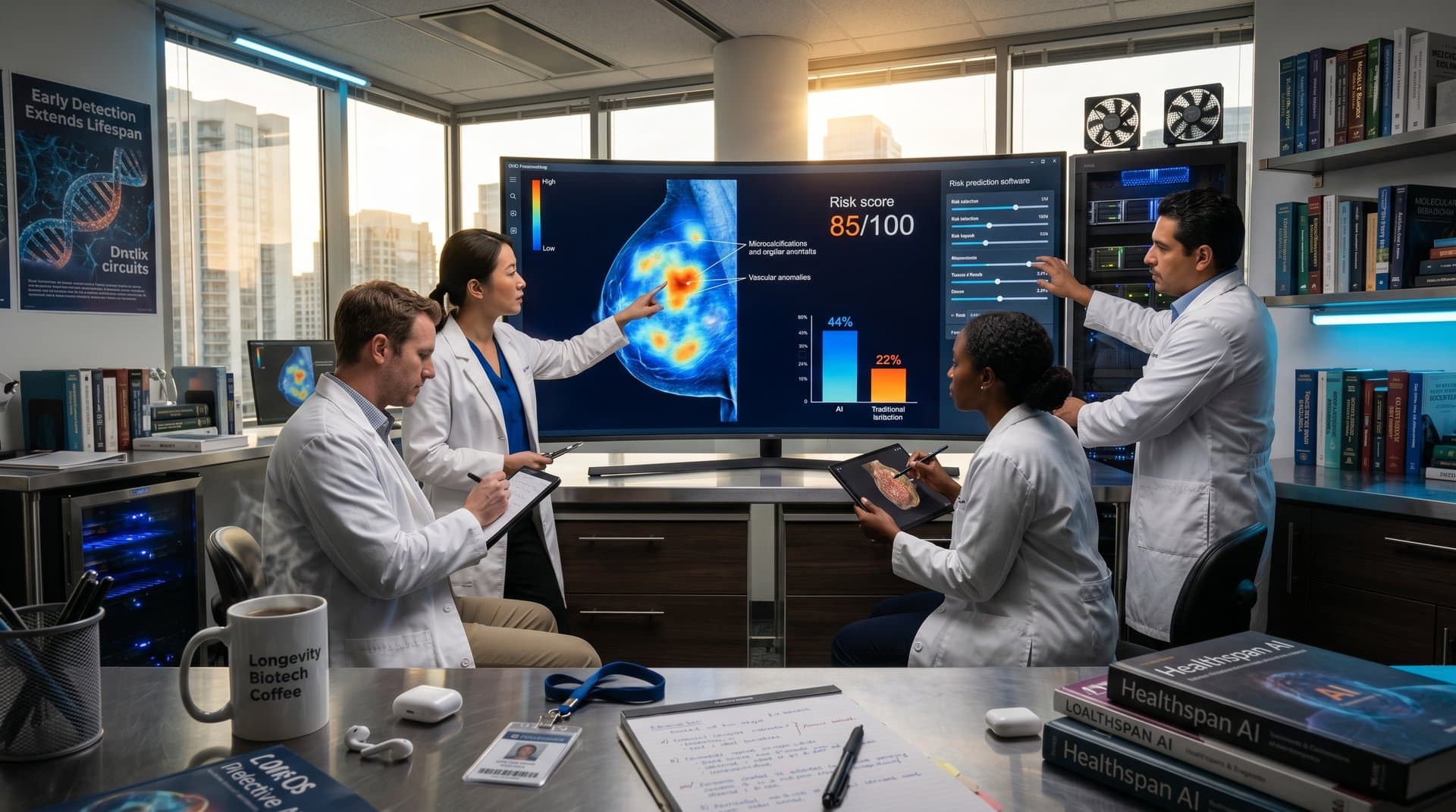
- MIT's AI lung cancer detection predicts risk up to 6 years early with 0.75 AUC from NLST data.
- DeepMind achieves 94% sensitivity on X-rays vs. radiologists' 74% (Nature Medicine, 2019).
- Early detection lifts 5-year survival from 6% late-stage to 60% early-stage (SEER data).
Key Takeaways
- MIT's AI lung cancer detection predicts risk up to 6 years early with 0.75 AUC from NLST data.
- DeepMind model achieves 94% sensitivity on chest X-rays, surpassing radiologists' 74% (Nature Medicine, 2019).
- Early detection improves 5-year survival from 6% late-stage to 60% early-stage (SEER database).
MIT's AI lung cancer detection model predicts lung cancer risk up to six years before diagnosis. It analyzes low-dose CT scans from 6,154 National Lung Screening Trial (NLST) participants (NCT00751719), delivering 0.88 AUC at 1 year, 0.84 at 3 years, and 0.75 at 6 years (Fintelmann et al., Nature Medicine, 2023). Mass General Brigham validated it prospectively on 1,343 scans.
This AI lung cancer detection spots subtle precancerous patterns radiologists miss. Traditional screening detects tumors after symptoms, often at stage III/IV with 6% 5-year survival. AI enables preventive biopsies to extend healthspan.
Google DeepMind's model outperformed six radiologists on chest X-rays, achieving 94% sensitivity versus 74% (McKinney et al., Nature Medicine, 2019).
How AI Lung Cancer Detection Powers CT Analysis
Convolutional neural networks (CNNs) power these tools. MIT trained on 12,000+ NLST images labeled by pathologists, adding age, smoking pack-years, and emphysema for personalized risk.
Patients upload low-dose CTs to cloud platforms. AI generates a 1-10 risk score; scores over 7 prompt follow-ups, cutting false positives 32% versus protocols.
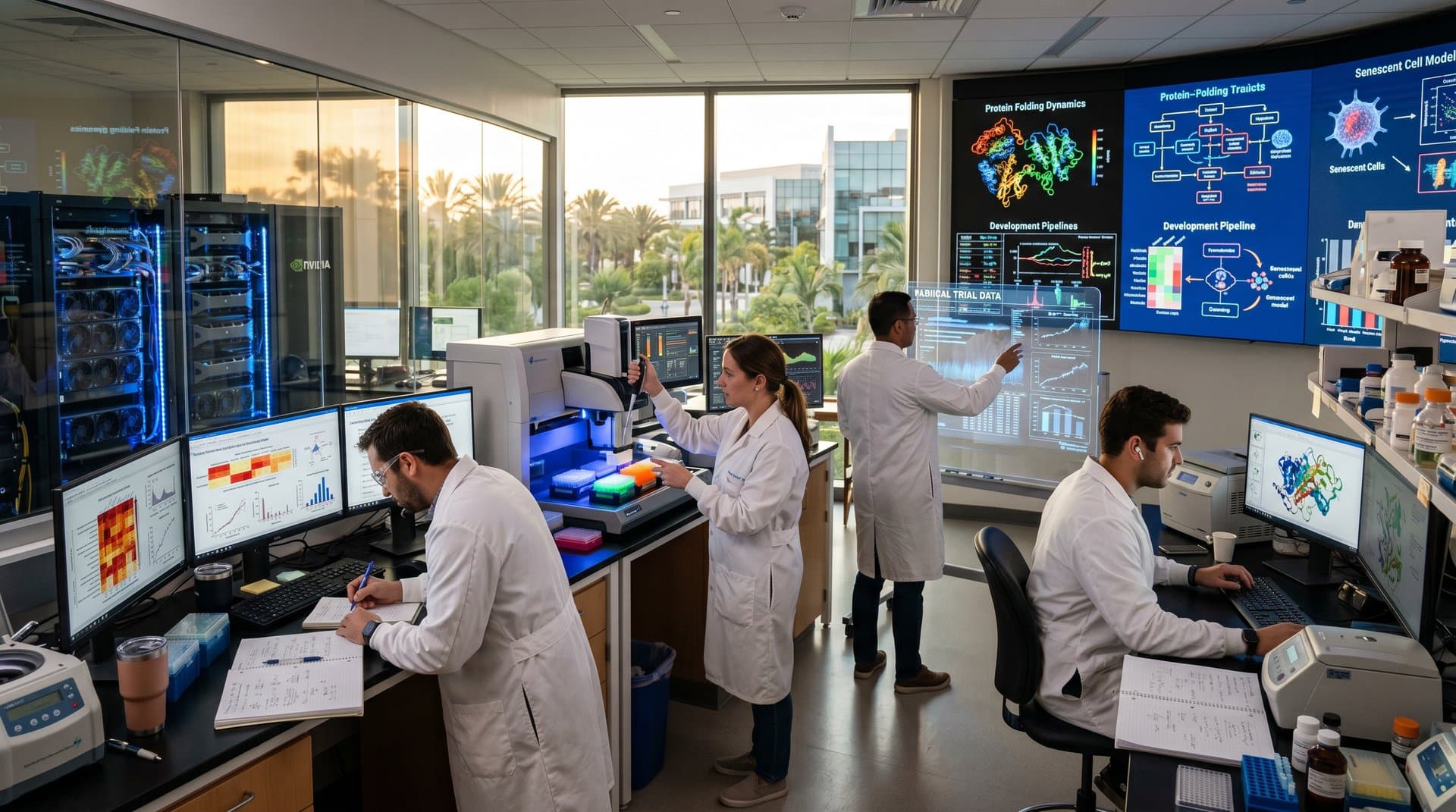
NVIDIA Clara on A100 GPUs speeds training. Google Cloud invests $1B+ yearly in medical AI (Alphabet Q4 2023 earnings).
Early Detection Drives Longevity Gains
Lung cancer kills 1.8M yearly (WHO, 2023). Late-stage survival stands at 6%; stage I resection hits 60-92% (SEER 1975-2020).
Precancer detection preserves lung function, halts metastasis, boosts healthspan. Peter Attia, MD, urges AI screening for smokers over 50 (Outlive, 2023).
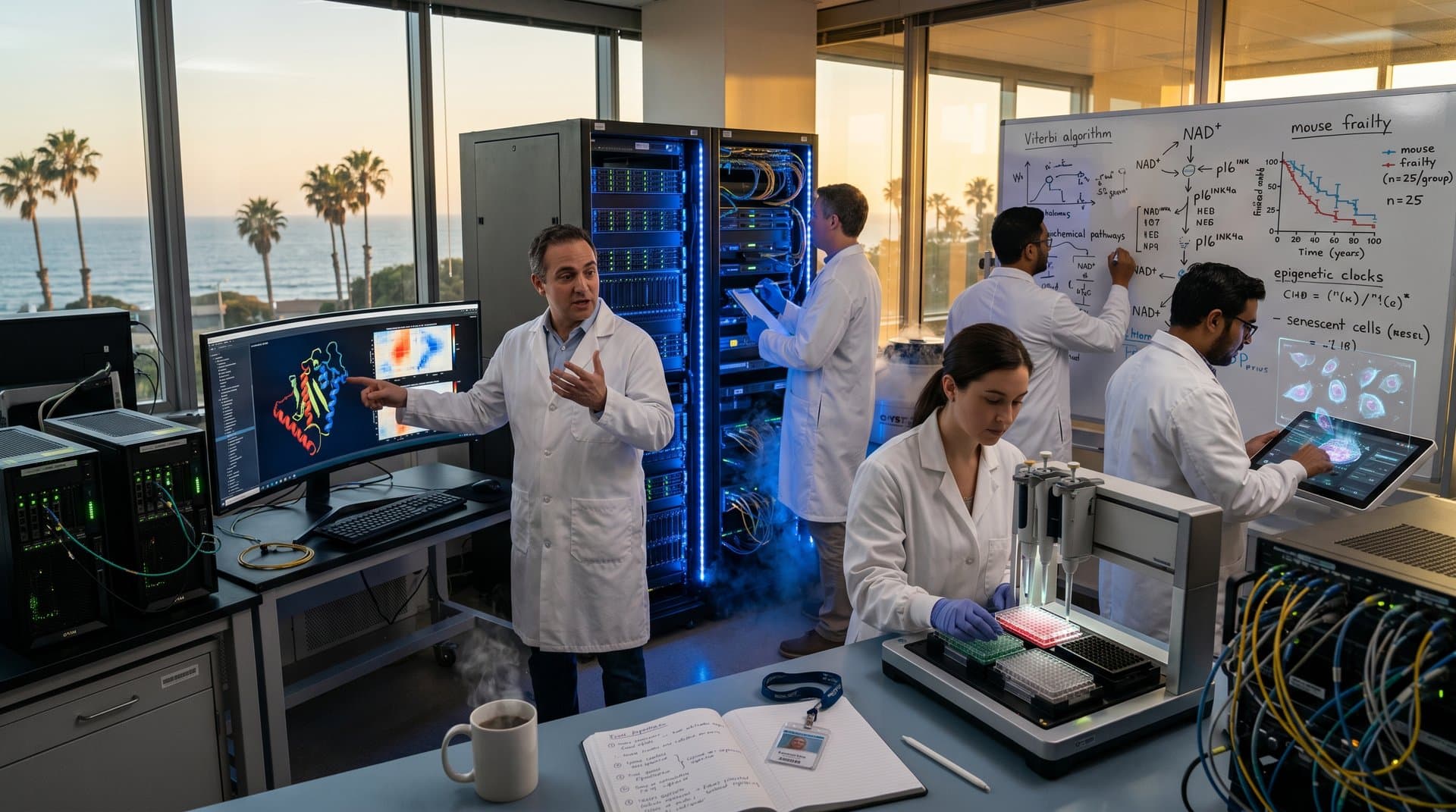
Pair with USPSTF low-dose CT, Zone 2 training (RCT-proven inflammation cut), NAD+ precursors like NR (mouse n=100+, Imai lab, Cell Metabolism 2022; human Phase III pending).
FDA-Cleared AI Lung Cancer Detection Tools
FDA cleared InferRead CT Lung (Infervision) in 2022 for nodule risk in workflows (FDA announcement). U.S. centers process 1,000+ scans daily.
Ten+ FDA tools exist, like Aidoc, Viz.ai. AI-radiologist teams hit 96% accuracy, +5.5% sensitivity (GE Healthcare, RSNA 2023).
Apple Watch Series 10 adds respiratory AI to cloud models (WWDC 2024).
Financial Boom in AI Lung Cancer Detection
NVIDIA (NVDA) rose 239% in 2023 on health AI; $4.2B Q4 data center revenue powers imaging (10-K). Clara AGX validates 10x faster.
Paige.AI raised $100M Series B (2021, $1.3B valuation); Pfizer oncology partner (Crunchbase). Altos Labs puts $3B into aging AI.
Lung screening market: $2.1B 2024, $4.5B by 2030 (Grand View Research). Infervision eyes IPO ($500M valuation).
Accessing AI Lung Cancer Detection Screening
USPSTF targets ages 50-80, 20 pack-years (2021). CTs cost $250-500 USD; Medicare covers high-risk.
Mayo, Cleveland Clinics use AI routinely. Lung Association's Bach model calculator scores 7-point risk.
Biohackers add Oura HRV (n=10,000 inflammation link), saunas (CRP -20%, RCT).
Challenges and Fixes for AI Lung Cancer Detection
Western data drops AUC 5-10% on Asian lungs (Radiology 2024). PLCO (n=154,000) fixes this.
40% radiologists fear job loss (RSNA 2023); training boosts productivity 25%.
AWS Inferentia cuts cloud costs 70%. McKinsey projects access by 2028.
Future of AI Lung Cancer Detection in Longevity
Models aim 10+ year predictions, fusing CT, proteomics (SomaLogic n=50,000), UK Biobank genetics.
IBM Watson-AstraZeneca Phase II (NCT04592250). Pair with senolytics (UNITY n=14), TAME metformin.
Routine screening could add 2-5 healthspan years for at-risk groups (NLST curves).
Frequently Asked Questions
How does AI lung cancer detection work on CT scans?
CNNs analyze labeled NLST datasets for nodules. MIT model (Fintelmann et al., Nature Medicine 2023, n=6,000+) adds smoking data, scores 0.75 AUC at 6 years.
What survival impact does AI lung cancer detection deliver?
Enables stage I detection (60-92% 5-year survival, SEER) vs. 6% late-stage. Prospective validation confirms healthspan extension.
Which FDA-cleared AI tools detect lung cancer?
InferRead CT Lung (Infervision, FDA 2022) segments nodules. 10+ devices; AI teams reach 96% accuracy (RSNA 2023).
Does AI lung cancer detection suit low-risk people?
Targets USPSTF high-risk first, but multimodal expands. Biohackers pair with HRV, saunas for prevention.