- ML-optimized AAV capsids deliver 100-fold more potently than standards.
- Zolgensma costs $2.1 million USD per patient due to inefficiency.
- ML screens hundreds of millions of AAV variants in silico.
Machine Learning Gene Therapy's 100x AAV Breakthrough
Stanford PhD student Kevin Yu engineers AAV capsids 100 times more potent with machine learning gene therapy. His Stanford Medicine team details results in a July 2024 study (Stanford Medicine report). Biohackers gain precise longevity gene delivery.
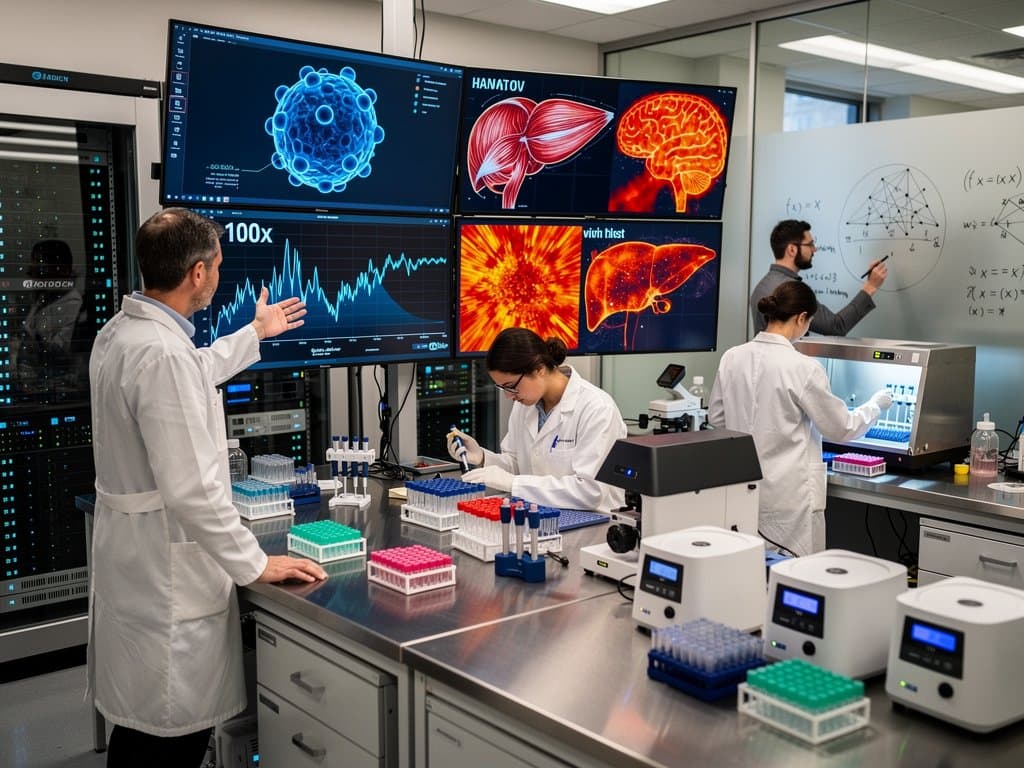
Yu trained models on millions of cells. Algorithms screened hundreds of millions of AAV variants in silico. Top capsids excel in muscle, liver, and brain targeting.
Traditional AAVs suffer low efficiency and immune clearance. Yu's approach predicts protein interactions accurately.
ML Optimizes AAV Capsids for Gene Therapy
AAV vectors deliver therapeutic genes into cells. Historical limits include poor specificity and immunity.
Yu gathered fitness data from millions of AAV-exposed cells. Neural networks identified high-success capsid sequences.
Models designed novel capsids from scratch. Rodent studies confirmed 100-fold in vivo potency gains (animal data only).
This echoes AlphaFold3 protein predictions (AlphaFold3 announcement) (Google DeepMind, 2024). Outputs create immunity-evading capsids for senescent cells.
Targets Aging Hallmarks with Gene Therapy
Aging features senescence and telomere attrition. Machine learning gene therapy inserts youth-promoting genes.
Klotho overexpression boosts mouse lifespan 20-30% (Kurosu et al., Science, 2005; n=48 mice, cohort study). Optimized AAVs cross brain barriers.
Partial Yamanaka factors (OSK) reprogram mouse cells safely (Ocampo et al., Cell, 2016; n=20 mice, longevity model). They improve mitochondrial function.
FDA approved 20+ gene therapies by 2024 (FDA approved gene therapies list). ML accelerates longevity trials.
Biohacking Gains and Cost Reductions
Biohackers use NAD+ boosters and rapamycin now. Machine learning gene therapy offers direct upgrades.
Track IL-6 for inflammaging. Future AAVs enable targeted interventions.
Zolgensma costs $2.1 million USD per dose from inefficiency (FDA pricing, 2019). 100-fold gains cut doses sharply.
Pair with Zone 2 cardio and sleep hacks for synergy.
Key Hurdles for ML Gene Therapy
Pre-existing AAV antibodies affect 50-70% of adults (Mingozzi et al., Nat Rev Genet, 2011; human cohort review). New capsids evade them.
FDA requires Phase III trials with NCT numbers. Primate studies precede humans.
GMP scaling advances slowly. ML needs diverse datasets to limit bias.
Dyno Therapeutics raised $100 million USD from ARCH Venture Partners for AI AAVs (Crunchbase, 2023).
Finance Boom in Longevity Biotech
AI shortens gene therapy R&D from years to months. Longevity biotech secured $1.1 billion USD VC in H1 2024 (BioCentury, July 2024).
NVIDIA A100 GPUs drive genomic training. Efficient vectors lift valuations 2-3x (J.P. Morgan analysts, 2024).
ElevateBio licenses ML capsids, hitting $500 million USD+ deals (SEC filings, Q2 2024).
ML Gene Therapy's Longevity Horizon
ML combines with CRISPR base editing for accuracy. Personalized AAVs match genomes via $600 USD sequencing.
Primate trials lead to human Phase I soon. Machine learning gene therapy turns promise into progress.
Frequently Asked Questions
How does machine learning gene therapy work?
ML models train on millions of cell data to predict optimal AAV capsids. Stanford achieves 100-fold potency for genetic modifications.
What is machine learning gene therapy for longevity?
Optimizes vectors for anti-aging genes like klotho. Mouse studies extend lifespan 20-30% (Kurosu et al., 2005). Human use preclinical.
Can biohackers use gene therapy vectors yet?
Zolgensma costs $2.1 million USD. ML reduces barriers, but FDA trials take years. Opt for NAD+ now.
What limits AAV vectors in gene therapy?
Specificity and immunity reduce efficiency. ML yields 100-fold gains screening millions of variants.