- UCSF AI model trained on 25,247 head CT scans achieves 0.935 AUROC for MACE prediction.
- High-risk patients show 3.84 hazard ratio for cardiovascular events per the model.
- Validation spans 18,610 patients from UCSF and two external hospitals.
Key Takeaways
- UCSF AI model trained on 25,247 head CT scans achieves 0.935 AUROC for major adverse cardiovascular events (MACE).
- High-risk patients face 3.84 hazard ratio for MACE including death, MI, and stroke.
- Model validated on 18,610 patients from UCSF and two external hospitals.
UCSF researchers unveiled an opportunistic screening AI model that predicts cardiovascular risk from routine head CT scans. The deep learning tool achieves 0.935 area under the receiver operating characteristic curve (AUROC) for major adverse cardiovascular events (MACE)—death, myocardial infarction, and stroke. RSNA presented these findings at its 2024 annual meeting (RSNA).
Researchers trained the model on 25,247 noncontrast head CTs from UCSF patients scanned from 2018 to 2023. Internal validation used 6,125 UCSF cases; external validation covered 12,485 patients from two other hospitals. High-risk patients showed a 3.84 hazard ratio for MACE over follow-up. Cardiovascular Business reported primary study details (Cardiovascular Business).
AI Extracts Heart Data from Head CT Scans
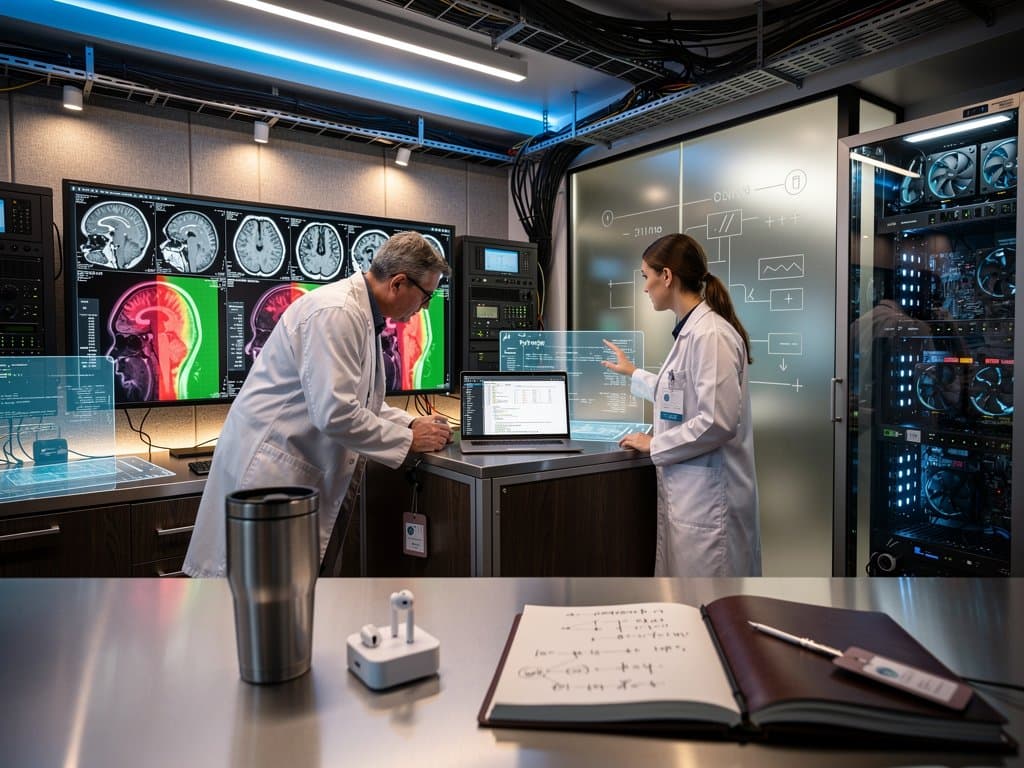
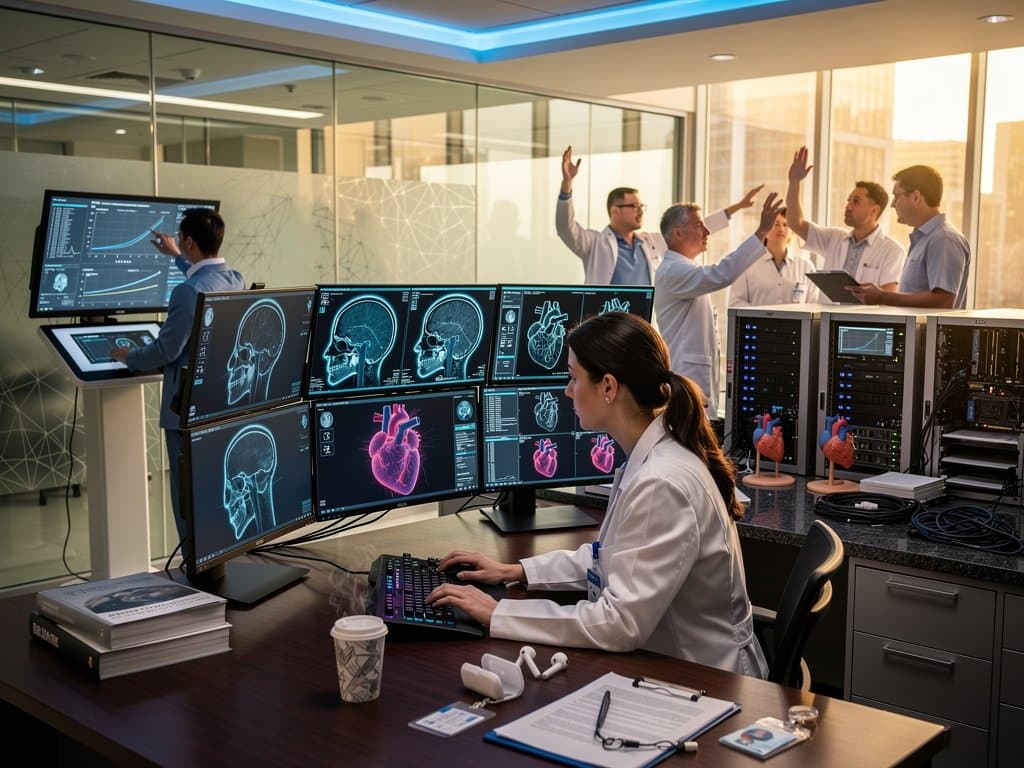
Routine head CTs for headaches, trauma, or stroke often capture heart structures in lower slices. The UCSF model detects left atrial enlargement—a precursor to atrial fibrillation and heart failure. Deep learning segments the left atrium and computes age-, sex-, and body size-adjusted volumes.
External validation across diverse populations and protocols confirmed robust performance. Radiologists integrate AI outputs into reports within seconds on PACS hardware. No added radiation, costs, or time required. American College of Radiology data notes 15 million annual U.S. head CTs ripe for this approach.
Opportunistic Screening Boosts Longevity Healthspan
Opportunistic screening detects silent cardiovascular risks years early. Targeted interventions—statins, blood pressure control, lifestyle shifts—reduce MACE incidence. Biohackers pair it with VO2 max tests, HRV tracking, and CGM for healthspan gains.
Peter Attia, MD, advocates such proactive strategies for longevity. NHLBI research ties left atrial enlargement to vascular dementia and coronary risks (NHLBI).
Financial Impact on Longevity Biotech
Aidoc and Viz.ai secured FDA 510(k) clearances for radiology AI, processing over 10 million scans yearly. UCSF validation supports adoption in 15 million U.S. head CTs annually, per American College of Radiology.
Clinics gain reimbursements via CPT codes for AI interpretation. Longevity funds backing Unity Biotechnology prioritize AI for trial stratification. This speeds Phase II/III tests for NAD+ boosters and klotho mimetics.
Grand View Research projects AI radiology market growth from $1.2 billion USD in 2023 to $5.2 billion USD by 2028, fueled by cardiovascular tools. Investors benchmark UCSF's 0.935 AUROC for $10-50 million USD licensing deals.
Future of AI in Preventive Wellness
Future models fuse head CT data with wearables and EHRs for metabolic profiling. EHR alerts will prompt physicians. Biohackers request screening during head CTs for trauma or migraines.
UCSF sets a benchmark for opportunistic screening AI. This tool uncovers cardiovascular threats, supporting healthspan extension via evidence-based interventions. Longevity protocols integrate it with rapamycin and plasma exchange.
Opportunistic screening transforms routine imaging into longevity assets.
Frequently Asked Questions
What is opportunistic screening with AI on head CT scans?
AI detects heart risks like left atrial enlargement from existing head CTs. UCSF model hits 0.935 AUROC on 25,247 scans, enabling dual-purpose imaging without added radiation.
How accurate is the UCSF AI for heart risk prediction?
The model achieves 0.935 AUROC for MACE. It stratifies high-risk patients with 3.84 hazard ratio, validated on 18,610 cases across institutions.
How does opportunistic screening aid longevity biohacking?
It uncovers silent risks for early interventions like exercise or statins. Biohackers integrate with biomarkers and wearables for optimized healthspan.
When will AI opportunistic screening become available?
FDA-cleared tools integrate into radiology workflows now. Request during head CTs for trauma or headaches; broad adoption expected in 2025.