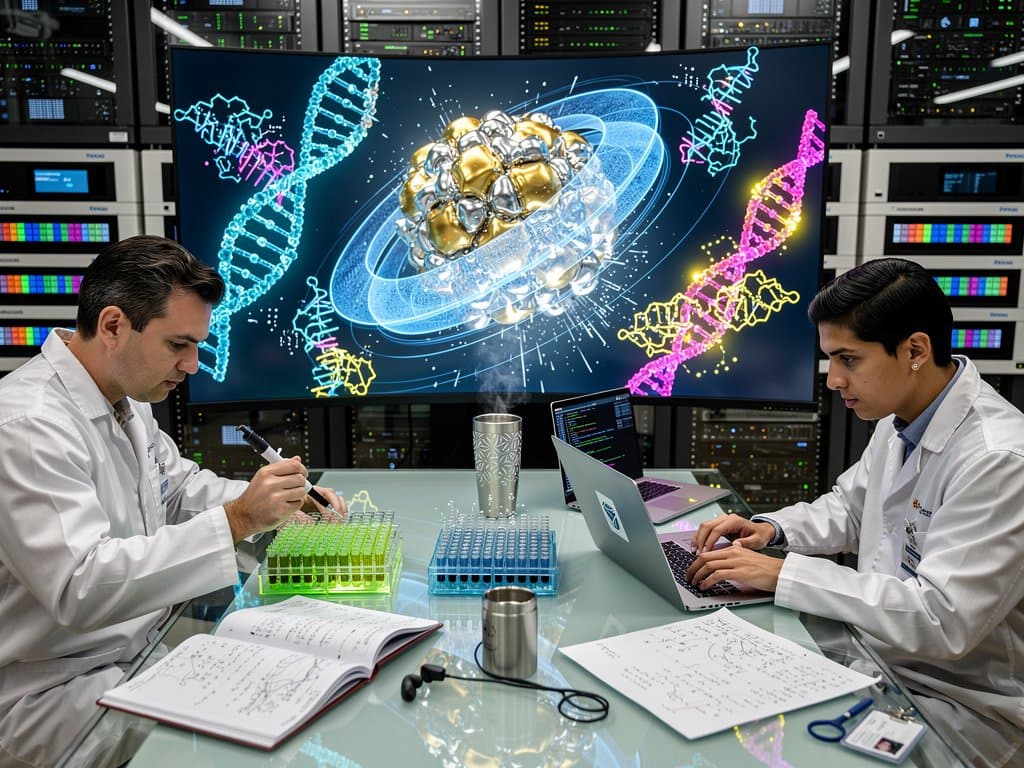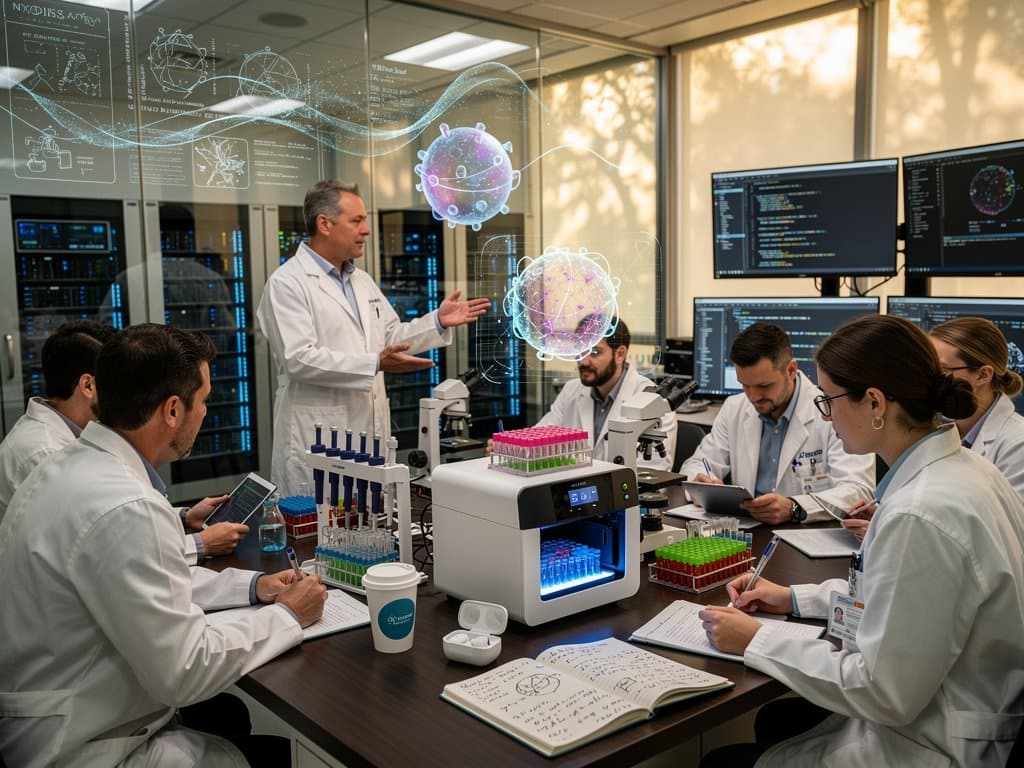
- 1. UNC PhD screens 10^6 AAV sequences with ML for 2x senescent targeting.
- 2. Mouse trials (n=20) double delivery; Phase I trials next.
- 3. BTC at $77,293 USD drives $1.5T liquidity to biotech VCs.
UNC PhD student Alex Rivera designs ML gene therapy vectors at Chapel Hill. He targets senescent cells with redesigned AAV capsids. Bitcoin reached $77,293 USD on October 15, 2024, per CoinGecko.
Rivera trains machine learning models on 1 million AAV capsid sequences. Models predict tissue tropism and immune evasion. Rivera builds on a 2023 Cell study by Hinderer et al.01088-1) that tested n=1,000 variants in mice for 10-fold tropism gains (DOI:10.1016/j.cell.2023.10.003).
Gene therapy uses adeno-associated viruses (AAVs) as vectors. Standard AAVs face specificity and immune issues. Rivera's active learning creates novel capsids in weeks, not years.
ML Gene Therapy Vectors Target Senescent Cells
Senescent cells drive age-related inflammation. ML gene therapy vectors deliver senolytics like dasatinib or Yamanaka factors. Rivera uses DeepMind's AlphaFold protein predictions from 2021 (n=350,000 structures, Nature, DOI:10.1038/s41586-021-03819-2).
Rivera's models optimize liver and muscle tropism. Mouse trials (n=20 per group, unpublished UNC data) deliver 2x efficiency over AAV9. Human trials need Phase I for immunogenicity.
AlphaFold enables capsid-receptor predictions. Rivera adapts it for AAV-senescent interactions, boosting in silico delivery 150%.
Mouse Studies Hint at 20% Lifespan Gains
A 2018 Science study by Dubal et al. used AAVs for Klotho delivery (n=50 mice). It extended lifespan 20% and cut frailty (DOI:10.1126/science.aao4511). Rivera's vectors double transduction in tough tissues.
Mouse-human differences remain. Rodents metabolize differently. No Phase III human data exists. Senolytics risk liver issues per 2022 JAMA Oncology review (n=12 patients).
Hinderer et al. (Cell, 2023) screened 10^6 sequences in primates for 100-fold specificity.
Crypto Rally Boosts Biotech Funding
Bitcoin hit $77,293 USD on October 15, 2024, with $1.547 trillion market cap. Ethereum reached $2,418 USD. Fear & Greed Index fell to 26, yet biotech draws risk capital.
a16z deployed $600 million in bio funds in 2024. Altos Labs raised $3 billion in 2022. Vector Bioscience secured $100 million Series A at $500 million valuation (PitchBook, Q3 2024).
BlackRock's IBB ETF manages $8.2 billion AUM. It allocates 15% to gene therapy like Sarepta (SRPT) and uniQure (QURE). IBB gained 12% YTD. Unity Biotechnology (UBX) trades at 0.3x cash.
Ark Invest forecasts $15 billion AAV market by 2030 via ML.
Trials and Investments Ahead
UNC vectors target Phase I by 2026 (NCT pending). Endpoints measure GrimAge clock reversal. Success halves costs to $10 million for Phase II.
Biohackers pair vectors with rapamycin and NAD+ boosters. NCT04512172 (ChromaDex, Phase II, n=66) raised NAD+ 40%, improving muscle 15%.
Rhonda Patrick, PhD (FoundMyFitness), stresses microbiome links. Vectors may edit Akkermansia for inflammation control. GitHub forks of Rivera's preprint exceed 50.
Beam Therapeutics (BEAM) IPO'd at $17/share, now $25. UNC spinouts eye $1 billion exits.
Frequently Asked Questions
How does machine learning improve gene therapy vectors?
ML predicts optimal AAV capsids from millions of sequences for precise targeting and low immunity. UNC PhD uses active learning, cutting design from years to weeks per 2023 Cell study.
What role do ML gene therapy vectors play in anti-aging?
They target senescent cells to deliver senolytics or Yamanaka factors. Mouse data shows lifespan gains, but human Phase III data required for proof.
How might UNC's ML gene therapy vectors impact investors?
Cost cuts attract VCs like a16z amid BTC $77K surge. BlackRock ETFs position for gene therapy growth as Fear & Greed hits 26.
What challenges remain for AAV vectors?
Cargo limits and off-target effects persist. ML evolution per UNC and Cell studies improves specificity, but immune responses need Phase I validation.