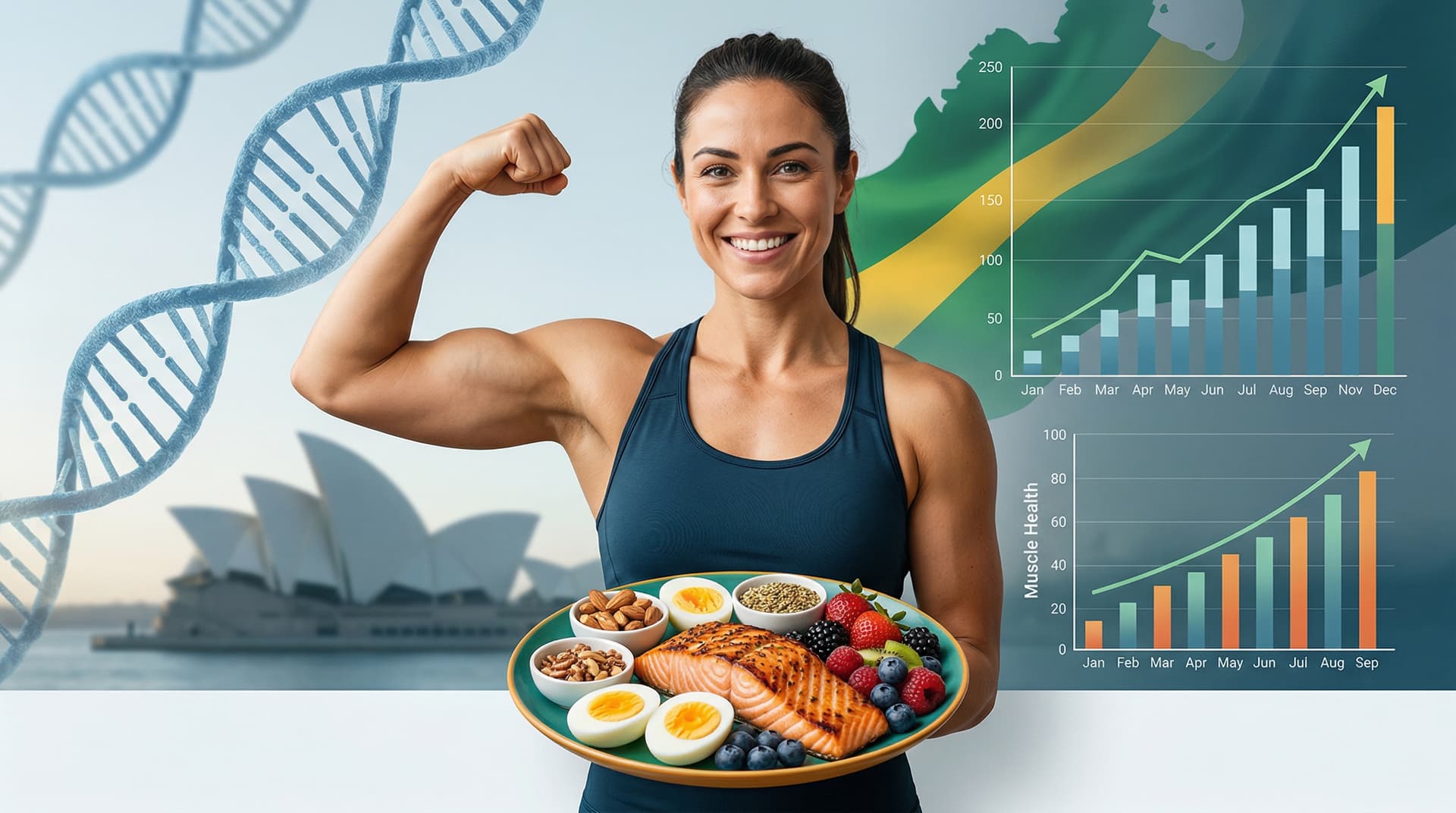
In the quest for longevity, preserving muscle mass emerges as a cornerstone of healthy aging. Sarcopenia—the age-related loss of muscle—contributes to frailty, falls, and premature mortality. A groundbreaking study published on December 18, 2024, by researchers at the University of Sydney provides compelling evidence that boosting protein consumption during midlife can fortify muscles and bones, offering a simple yet powerful biohacking strategy.
The Study: Protein's Protective Power
The research, detailed in the Journal of Nutrition, analyzed data from over 1,000 Australian women aged 50 and older participating in the Geelong Osteoporosis Study. This longitudinal cohort tracked dietary habits from midlife (around age 50) through later years, correlating protein intake with measures of muscle strength, bone density, and frailty.
Key findings were striking:
- Women in the highest protein quartile (averaging 1.2g per kg of body weight daily) exhibited 25% greater grip strength compared to those in the lowest quartile.
- Higher protein consumers had 20% higher lean muscle mass and improved bone mineral density.
- Frailty risk was reduced by up to 30%, with better performance in physical function tests like the timed up-and-go.
Lead researcher Dr. Feifei Li emphasized, "Our results highlight a modifiable lifestyle factor—dietary protein—that influences musculoskeletal health across decades. This isn't just about bulking up; it's about maintaining vitality for longevity."
The study controlled for confounders like physical activity, calorie intake, and hormonal status, strengthening its causal implications. Protein sources mattered too: animal proteins (meat, dairy, fish) showed stronger associations than plant-based, likely due to higher bioavailability and essential amino acid profiles.
Why Protein Fuels Longevity
Muscle isn't just for aesthetics or athletics; it's a vital organ for metabolic health. Skeletal muscle accounts for 40% of body mass and plays roles in glucose disposal, insulin sensitivity, and inflammation control. As we age, anabolic resistance kicks in—muscles become less responsive to protein signals like mTOR activation from leucine.
Biohackers have long championed protein optimization. Figures like Peter Attia and Rhonda Patrick advocate 1.6-2.2g/kg body weight daily for those over 40, aligning with this study's high performers. The mechanism? Protein stimulates muscle protein synthesis (MPS), countering sarcopenia. In women, post-menopausal estrogen decline accelerates loss, making dietary intervention crucial.
This dovetails with prior research:
- A 2023 meta-analysis in The American Journal of Clinical Nutrition linked higher protein to 15% lower all-cause mortality.
- The PROT-AGE study group recommends 1-1.2g/kg for older adults, with even higher for active individuals.
Biohacking Your Protein Intake
Translating science to practice, here's how to leverage this for your longevity stack:
1. Hit the Targets
- Women 50+: Aim for 1.2-1.6g/kg. A 60kg woman needs 72-96g daily.
- Distribute evenly: 25-40g per meal to maximize MPS.
2. Optimal Sources
| Source | Protein/g | Bioavailability | Longevity Bonus | |--------|-----------|-----------------|-----------------| | Whey isolate | 25g/scoop | High | Fast-absorbing, leucine-rich | | Eggs | 6g/egg | High | Choline for brain health | | Salmon | 25g/100g | High | Omega-3s for inflammation | | Greek yogurt | 10g/100g | High | Probiotics for gut-longevity axis | | Lentils | 9g/100g | Medium | Fiber for metabolic health |
Prioritize leucine-rich foods (>2.5g/meal) to trigger MPS.
3. Timing and Pairing
- Consume post-workout or with resistance training.
- Pair with vitamin D and creatine for synergy—both enhance muscle function.
- Intermittent fasters: Prioritize protein in feeding windows.
4. Supplements for Optimization
- Essential Amino Acids (EAAs): 10-15g if whole foods fall short.
- Collagen peptides: 15g daily for joint and skin longevity.
- Track with apps like Cronometer to personalize.
Caveats and Broader Context
While promising, the study is observational, so causation isn't proven—though prospective design mitigates reverse causation. Plant proteins may suffice with strategic combining (e.g., rice + pea). Vegans: Focus on quantity and leucine supplements.
Broader nutrition context: Protein shines within a whole-foods framework. Combine with Mediterranean-style eating—veggies, nuts, olive oil—for compounded effects, as seen in Blue Zones centenarians averaging high plant proteins.
Finance angle: This fuels growth in the $50B+ protein supplement market. Companies like Orgain and Levels (glucose-tracking for carb-protein balance) saw stock bumps post-similar studies. Expect more AI-driven personalized protein plans in 2025.
Actionable Longevity Protocol
1. Audit intake: Log 3 days, adjust up 20-30%. 2. Meal prep: Eggs + spinach breakfast, salmon salad lunch, steak stir-fry dinner. 3. Lift weights 3x/week. 4. Monitor: DEXA scans or grip strength yearly.
In an era of GLP-1 drugs like Ozempic preserving muscle via protein emphasis, this study validates nutrition-first biohacking. Simple, accessible, evidence-based—protein might be your longevity lever. Start today; your future self will thank you.
Word count: 912