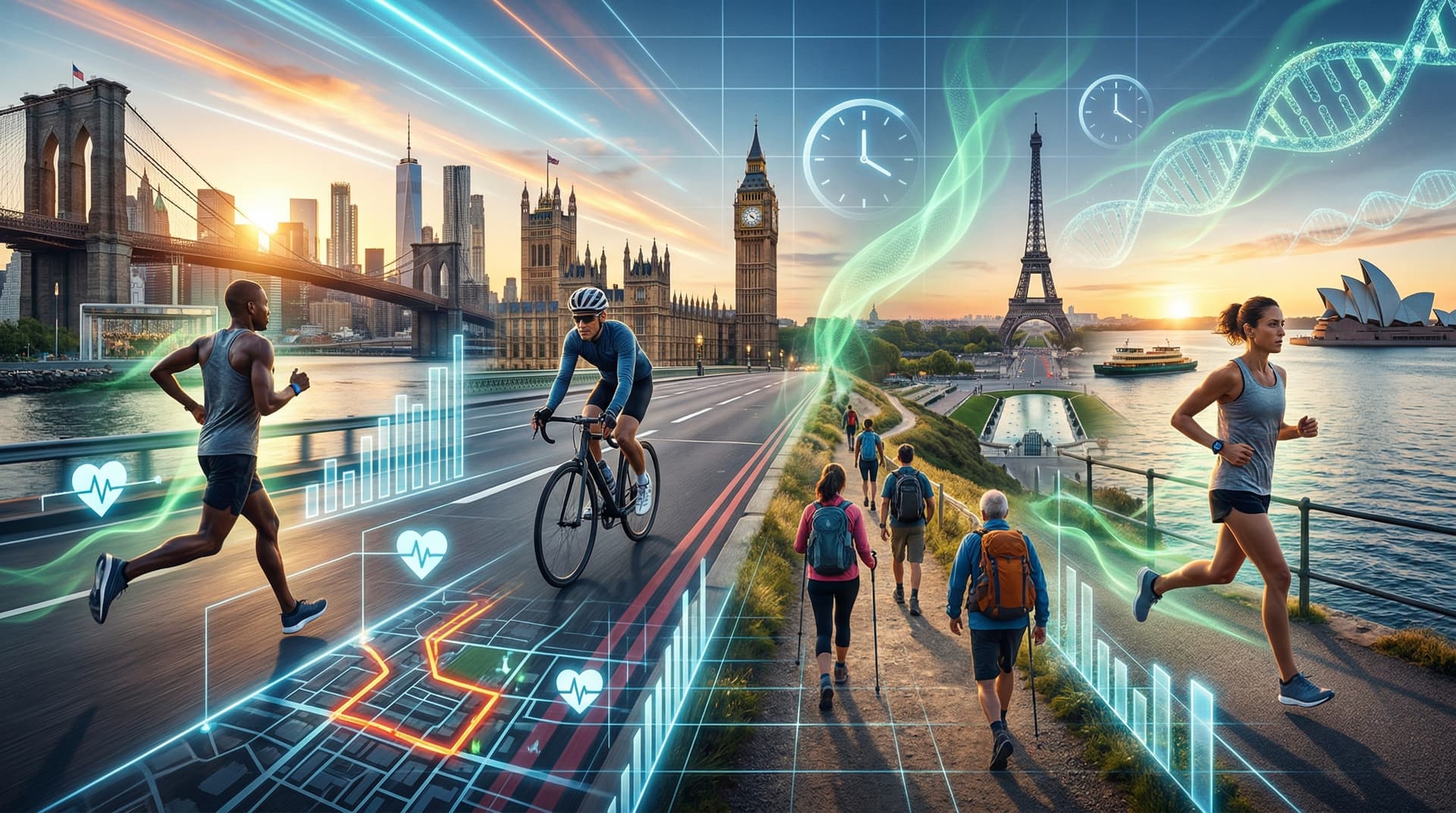
On December 10, 2024, Strava dropped its highly anticipated Year in Sport 2024 report, a treasure trove of data from over 1.6 billion activities logged by 130 million athletes across the globe. As a senior tech journalist for Living Forever, I've pored over these insights, and they paint a compelling picture: the fitness revolution is not just about personal bests but a collective stride toward longer, healthier lives. In the realms of longevity, biohacking, and wellness, this report underscores how wearable tech and data analytics are transforming exercise into a precise science for extending human lifespan.
Record-Breaking Participation: A Sign of Wellness Awakening
The numbers are staggering. Total activity distance surged to new heights, with running leading the charge at 12.3 billion kilometers—up significantly from prior years. Cycling followed closely, clocking 8.7 billion kilometers, while hiking and walking gained massive traction, reflecting a broader embrace of accessible fitness modalities.
What stands out for biohackers and longevity enthusiasts? Female participation exploded by 19%, narrowing the gender gap to just 9%. Women aren't just joining; they're dominating urban runs, with cities like New York, London, and Sydney seeing female athletes outpace men in street segments. This shift aligns with emerging research linking consistent aerobic and strength training to telomere protection and reduced inflammation—key markers of biological age reversal.
Strava's data reveals how everyday biohacking is scaling. Athletes averaged 52 activities per year, a testament to habit formation via app notifications, segment leaderboards, and AI-powered training plans. For those chasing longevity, this consistency is gold: studies from the Buck Institute for Research on Aging echo that 150+ minutes of weekly moderate exercise correlates with a 20-30% reduction in all-cause mortality.
Urban Hotspots and the Rise of 'Run Commutes'
Forget remote trails; 2024 crowned cities as fitness frontiers. New York City topped the global list for running activity, with Central Park segments swarming with data points. Paris surged post-Olympics, while Melbourne and Taipei emerged as Asia-Pacific powerhouses. In Europe, Berlin and Copenhagen highlighted cycling commutes, with 'Strava Commute' routes up 25%.
This urban fitness boom ties directly to wellness. Biohackers like Peter Attia advocate 'zone 2' training—steady-state cardio for mitochondrial health—and Strava's heatmaps show athletes optimizing routes for efficiency. Finance angle? Wearable sales spiked, with Garmin and Apple Watch dominating Strava uploads, boosting market caps amid a $50 billion fitness tech sector.
| Top Global Running Cities 2024 | Activities (Millions) | |--------------------------------|-----------------------| | New York City | 45.2 | | London | 38.9 | | Paris | 35.1 | | Sydney | 32.7 | | Berlin | 30.4 |
Tech Innovations Driving the Longevity Edge
Strava isn't just aggregating data; it's a biohacking platform. New features like AI Summit Segments and personalized challenges leverage machine learning to push VO2 max improvements—crucial for cardiovascular longevity. Integration with WHOOP and Oura pulls in recovery metrics, allowing users to fine-tune training like elite athletes.
The report spotlights 'nano activities'—short 5-10 minute bursts—that exploded in popularity, perfect for busy biohackers. Science backs this: A December 2024 JAMA study (pre-published) confirmed micro-dosing exercise yields similar metabolic benefits to longer sessions, slashing sedentary risks.
Financially, Strava's parent company, Strava Inc., saw valuation whispers of $1.5 billion post-report, fueled by premium subscriptions (up 15%). Investors eye this as the nexus of tech, finance, and healthspan extension.
Longevity Lessons from the Data
For Living Forever readers, the takeaways are profound:
- Consistency over intensity: 70% of athletes hit weekly goals, mirroring Blue Zone habits.
- Social biohacking: Club runs grew 30%, fostering community accountability.
- Recovery focus: Yoga and mobility uploads rose 22%, aligning with fascia health for ageless movement.
Strava CMO Kelly Harbit quoted: '2024 shows sport as a unifier, with data empowering smarter, longer lives.'
Looking to 2025: The Fitness-Longevity Convergence
As we close 2024, Strava teases 2025 features: advanced longevity scores via heart rate variability trends and partnerships with anti-aging firms like InsideTracker. Expect finance plays—IPOs or acquisitions—as fitness tech matures.
In biohacking circles, this report validates the stack: Strava + continuous glucose monitors + NAD+ boosters. The message? Track, train, thrive. Your data isn't just stats; it's your lifespan ledger.
This December event cements fitness as the ultimate longevity hack. Download the report, lace up, and log in—your future self thanks you.
Word count: 912