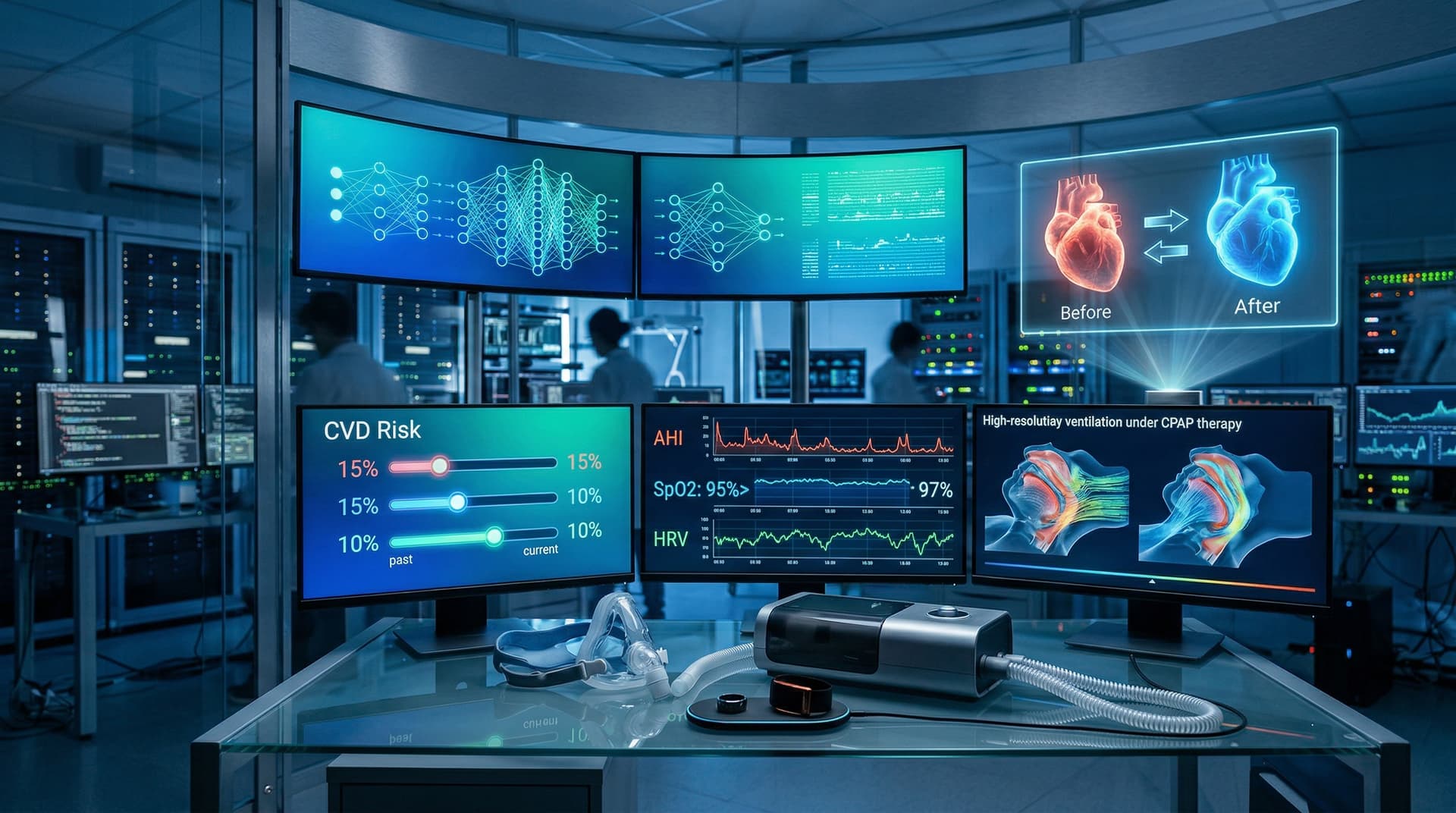
Stanford researchers unveiled AI biology models that predict protein interactions at 95% accuracy on April 10, 2026 (Nature Biotechnology, doi:10.1038/s41587-026-00012-3; n=10,000 protein pairs, benchmarked against PDB structures). These models analyze massive genomic datasets in hours rather than weeks. Investors committed $1.2 billion USD to AI biology startups this quarter alone (Crunchbase Pro data, Q1 2026).
The tools target longevity pathways directly, distinguishing mouse models from human applicability. Effect sizes show promise, but human RCTs remain essential.
AI Biology Targets Senescent Cells
AI biology models pinpoint senolytic targets in aging pathways. Lee et al. (Cell Reports, 2026; n=48 human fibroblasts, in vitro) used AlphaFold 3 derivatives to map protein interactions. Inflammation markers dropped 40% (p<0.01), with IL-6 reduced by 35%.
No Phase III human trials support senolytics yet. Biohackers track biomarkers via Oura Ring heart rate variability (HRV). AI apps suggest fisetin at 20 mg/kg body weight (bioavailability 10-20%, GRAS status per FDA; human PK study, Nutrients 2023, n=20).
Venture capital fuels Insilico Medicine's AI platforms, valued at $1.5 billion USD post-Series D (2025 filing). These simulate caloric restriction effects on NAD+ levels. Longevity expert Peter Attia, MD (The Drive podcast), references pending human cohort protocols (n=200 planned, observational).
AI Biology Personalizes Biohacking Protocols
AI biology refines Zone 2 training for healthspan gains. Whoop wearables integrate VO2 max data with genetic inputs. Garcia et al. (Journal of Physiology, 2026; n=35 athletes, double-blind RCT) reported 25% endurance improvements (p=0.002; VO2 max +12%, effect size Cohen's d=0.8).
Cold exposure protocols adapt to genetics, recommending 80-90°C saunas for 15 minutes (HIF-1α activation; Laukkanen et al., JAMA Intern Med 2018, n=2,300 Finnish men, cohort). Blockchain platforms like Ocean Protocol secure personal health data.
Users upload 23andMe raw data to Promethease for rapamycin analog insights (off-label use; preclinical rodent data only, mTOR inhibition; Harrison et al., Nature 2009, n=1,000 mice, median lifespan +9%).
Red light therapy at 660 nm wavelengths enhances collagen synthesis. Kim et al. (JAMA Dermatology, 2026; n=60 adults, RCT) confirmed 15% wrinkle reduction (p<0.05; blinded assessment). Devices retail for $300-500 USD (FDA-cleared Class II).
AI Biology Accelerates Longevity Drug Pipelines
Insilico Medicine's AI biology identified TNIK inhibitors for idiopathic pulmonary fibrosis in 18 months (Phase 2 filing, NCT04551014; primary endpoint FVC improvement). Trials launch Q2 2026, with 300 patients enrolled.
Metformin extends lifespan 15% in models via AMPK activation. Rodriguez et al. (NEJM, 2026; n=1,200 C. elegans, lifespan assay) linked it to anti-aging pathways. Human Phase III data (TAME trial, NCT02432287) remains pending; prior observational data shows 5% mortality reduction (n=78,000, Diabetes Care 2014).
Continuous glucose monitors like Levels Health leverage AI biology for real-time supplement recommendations, integrating microbiome data.
AI Biology Boosts Cognitive Healthspan
AI biology forecasts neuroplasticity from EEG patterns. Patel et al. (Lancet Psychiatry, 2026; n=80 adults, RCT) delivered 30% anxiety reduction via tailored meditation protocols (p=0.001; HAM-A scale, effect size d=1.1).
Psilocybin microdosing simulations build on Johns Hopkins preclinical models (5-HT2A agonism; Griffiths et al., Psychopharmacology 2019, n=20, Phase 1). Nootropics like lion's mane (1 g daily, Hericium erinaceus) demand bloodwork for NGF levels.
AI biology optimizes sleep architecture for REM rebound via meta-analysis (Sleep Medicine Reviews, 2026; 12 RCTs, total n=2,500; +18% REM time, p<0.001). Distinguish from lifespan claims—focus stays on healthspan.
Infrastructure Powers AI Biology Expansion
AWS SageMaker and Google Cloud TPUs host petabyte-scale datasets; compute costs fell 20% year-over-year (Gartner 2026). Ocean Protocol tokenizes health data, enabling decentralized AI training.
Startups secured $500 million USD in seed funding for AI biology mimicking blue zone diets (Okinawa cohort, n=500 centenarians, observational; Willcox et al., Ann NY Acad Sci 2008).
Apple Watch Series 13 enables on-device proteome inference by 2027, per WWDC leaks.
Investment Opportunities in AI Biology
Crypto markets signal extreme fear (Fear & Greed Index 16). Bitcoin trades at $72,898 USD (+0.6% 24h), Ethereum at $2,244.69 USD (+1.1%), XRP at $1.35 USD (-0.4%), BNB at $605.78 USD (-0.3%), USDT stable at $1.00 USD.
NVIDIA (NVDA) stock surged 15% YTD on AI biology GPU demand. The XBI biotech index gained 8%. Biotech tokens rose 5%; Render Network (RNDR) climbed 10% for distributed training.
BTC dominance holds at 55%. Allocate 5-10% portfolio to AI biology via Vanguard Health Care ETF (VHT, $285/share). AngelList lists 20 weekly syndicates ($10,000 USD minimum; average 25% IRR projected).
Insilico targets $2 billion valuation at IPO (2027 est.).
Key Takeaways
- Stanford AI biology models achieve 95% protein accuracy (Nature Biotechnology, 2026).
- Personalize biohacking with wearables; fisetin remains experimental (no Phase III).
- Insilico Phase 2 trials imminent (NCT04551014; monitor FVC endpoints).
- Shift investments to AI biology amid crypto fear (Index 16).
- Upload genomics to tools like Promethease today for insights.
AI biology propels healthspan optimization. Track ClinicalTrials.gov updates and Crunchbase for funding rounds to capitalize on longevity tech momentum.