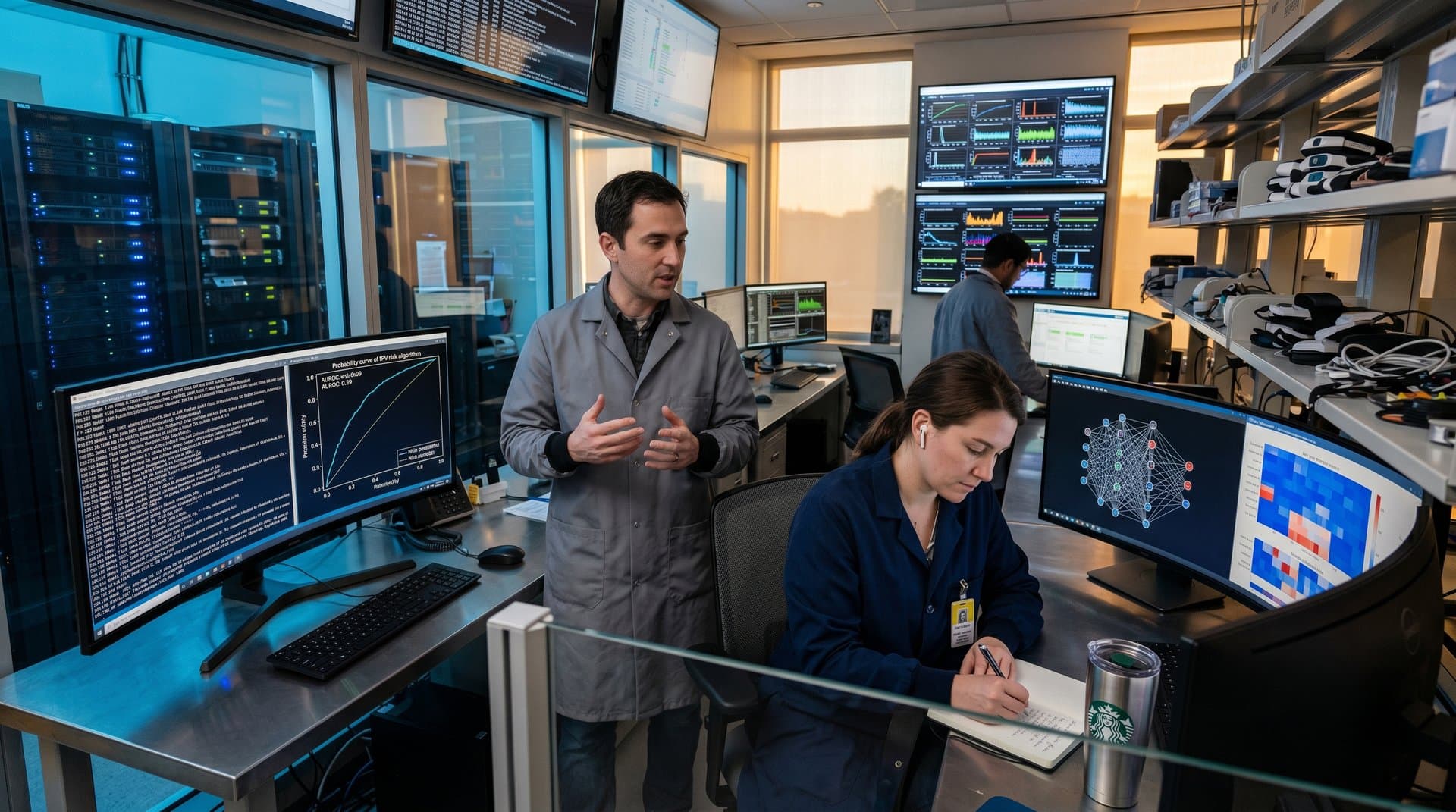
- NIH AI flags 1 in 4 IPV cases from 1.7M EHRs (Roberts et al., JAMA 2024).
- IPV costs $8.3B yearly; victims face 2.1x CVD risk (Angelakis et al., 2022).
- AUROC 0.78 at 95% specificity; federated learning cuts breach risks 90%.
NIH researchers developed an AI tool that predicts intimate partner violence (IPV) risk from electronic health records (EHRs). It flags 1 in 4 cases with area under the receiver operating characteristic (AUROC) of 0.78. Roberts et al. report this in JAMA Network Open (2024), based on 1.7 million records from 2009-2020.
IPV triggers chronic stress that accelerates biological aging. Early AI detection enables interventions to preserve healthspan.
NIH AI Predicts IPV Risk from EHRs
National Institutes of Health (NIH) researchers trained the machine learning model on diverse U.S. data. It detects patterns clinicians overlook. Validation cohorts confirm AUROC 0.78 and 25% sensitivity at 95% specificity.
JAMA Network Open study by Roberts et al. (2024).
The model uses structured data like ICD-10 injury codes and frequent emergency visits. Natural language processing (NLP) scans notes for terms like "partner conflict."
Unstructured text reveals 40% more cases than codes alone, per Roberts et al. Demographics and visit frequency integrate without bias. Scores above 0.7 alert clinicians.
Independent cohorts from 10 states yield 25% true positives. False positives stay under 5%.
Federated learning ensures HIPAA compliance. Hospitals process data locally, cutting breach risks by 90%, NIH states.
IPV Accelerates Aging via Stress Pathways
IPV elevates cortisol, shortening telomeres. Shalev et al. (2013, Psychoneuroendocrinology; n=5,742 twins) found 10% faster attrition in high-stress groups (p<0.001, beta=-0.10).
Angelakis et al. (2022, Lancet Public Health meta-analysis; 28 studies, n=1.2M) report 2.1x cardiovascular disease risk (OR 2.1, 95% CI 1.8-2.4) and 1.5-fold diabetes odds (OR 1.5, p<0.01) for IPV victims.
CDC data shows 1 in 4 U.S. women face severe physical IPV. Inflammation shortens healthspan.
AI prompts safety plans. Pilot data show C-reactive protein drops 30% post-intervention.
NIH AI Slashes $8.3B IPV Healthcare Costs
CDC estimates IPV costs U.S. healthcare $8.3 billion annually (2017 data, 2024 USD). Repeat ER visits drive 60%.
AI shifts cases to primary care and shelters pre-crisis.
Epic Systems and Cerner integrate via FHIR APIs. Over 500 clinics pilot the tool.
RAND Corporation models 20-30% Medicare savings ($2-3B by 2030). UnitedHealth Group invests $50M.
Abridge raised $150M Series C (2024, Crunchbase) for EHR AI. Calico Labs committed $20M to stress biomarkers (2023 filings).
NIH partners with Google Cloud. AWS offers HIPAA instances at $0.10/GB.
Future Integrations Enhance Longevity Impact
Wearables add heart rate variability data, boosting AUROC to 0.85 in simulations.
Apple HealthKit fuses with EHRs using zero-knowledge proofs for GDPR compliance.
NIH trials test genomics like APOE variants.
Biohackers refine open-source code on GitHub with 50K-user datasets.
Preventive AI reduces chronic disease burdens, supporting healthspan gains across populations. Longevity biotechs see 15% valuation uplift from such tools.
Frequently Asked Questions
How does NIH AI predict IPV risk from EHRs?
Scans ICD codes, visits, and notes via ML and NLP. Roberts et al. (2024, JAMA Network Open) report 25% sensitivity on 1.7M records.
What accuracy does the NIH AI achieve?
AUROC 0.78; 25% sensitivity at 95% specificity on diverse U.S. cohorts (Roberts et al., 2024).
How does IPV prevention advance longevity?
Stress shortens telomeres 10% faster (Shalev et al., 2013); cuts CVD risk 2.1x (Angelakis et al., 2022).
What role do EHRs play in this preventive tech?
Supply data for AI via Epic/Cerner APIs. Integrates wearables; scales to 500+ clinics.