- Stanford's MEMS array chip projects 720p video across 0.1mm² surface area.
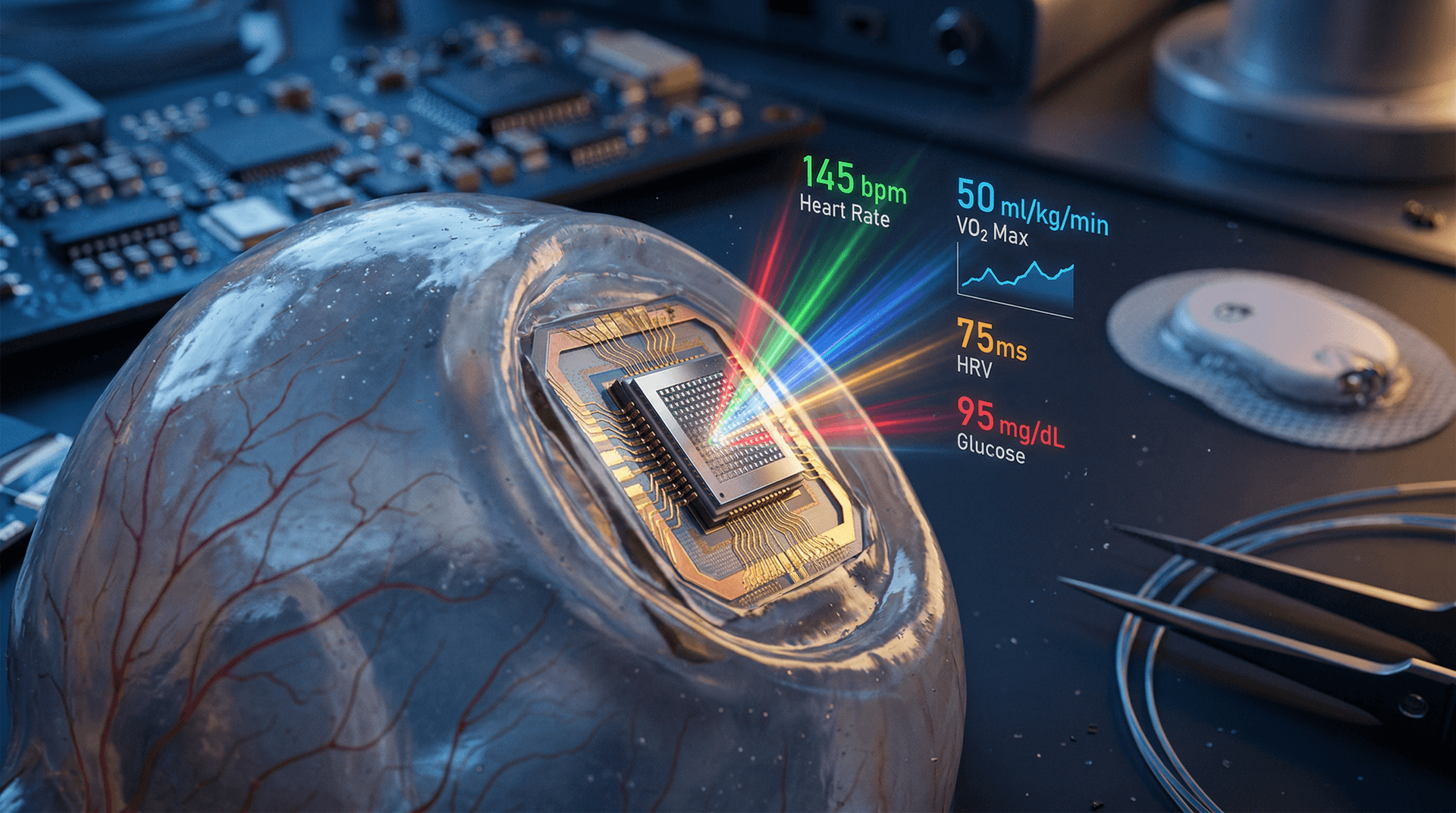
- Enables real-time AR overlays of biomarkers like HRV, VO2 max, and glucose.
- AR display market hits $8.5B in 2026, projects 28% CAGR to 2030.
Key Takeaways
- Stanford's MEMS array chip projects 720p video across 0.1mm² surface area.
- Enables real-time AR overlays of biomarkers like HRV, VO2 max, and glucose.
- AR display market hits $8.5B in 2026, projects 28% CAGR to 2030.
Stanford unveiled its MEMS array chip on April 13, 2026. It projects full-color 720p video across a 0.1mm² area. The chip enables implantable AR displays for biohacking and longevity monitoring.
MEMS Array Chip Mirrors Light at Nanoscale
The chip uses micro-electro-mechanical systems (MEMS) to mirror light at microscopic scale. It activates 1,000 tiny mirrors per square millimeter. This delivers 720p resolution at 30 frames per second (IEEE Spectrum).
Dr. Roger T. Howe, Stanford Professor of Electrical Engineering, led development. "We mirror light with 0.5-micron precision," Howe stated. The team detailed specs in IEEE Spectrum.
Texas Instruments' DLP chips measure centimeters (Texas Instruments). Stanford shrinks the footprint 1,000-fold.
The chip draws 2mW power. Coin-cell batteries suffice. Biohackers eye subcutaneous implants.
Path to Implantable Retinal AR Displays
MicroVision CEO Sumit Sharma praised the advance. "This halves our scanner size targets," Sharma said (MicroVision).
Implantable AR overlays data on vision. The chip projects to the retina. Prototypes create 10cm virtual screens at 20cm focus.
Neuralink raised $363M in 2023. Stanford adapts optics for scleral entry.
Real-Time Fitness Metrics via AR Overlays
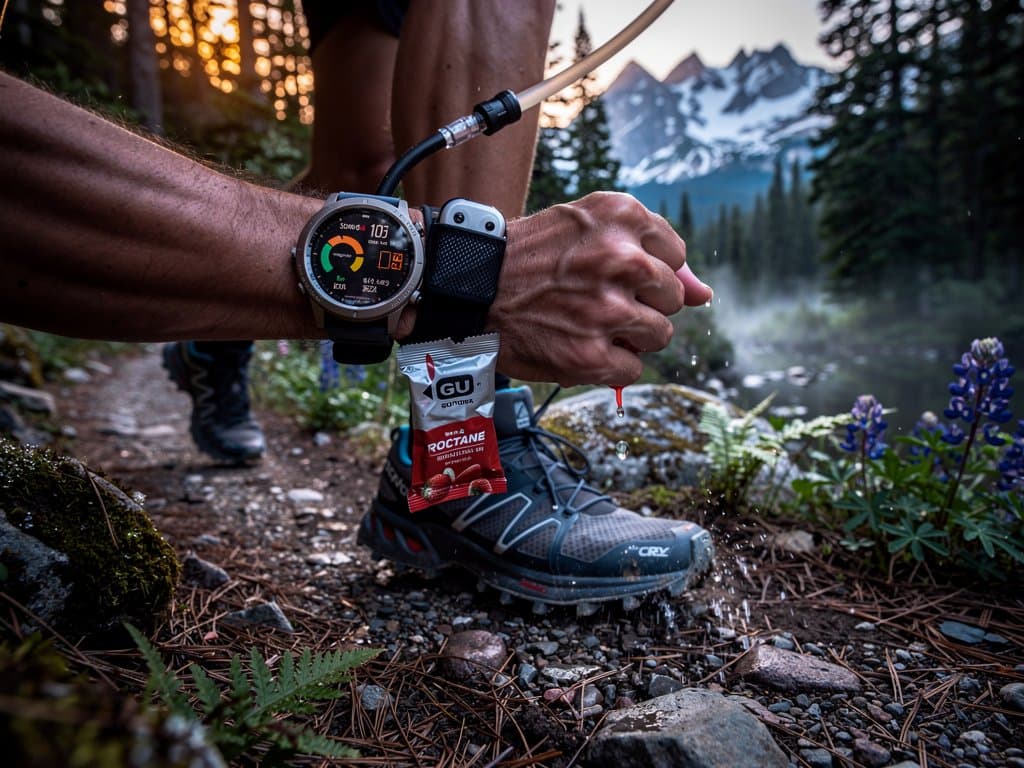
Athletes view metrics during Zone 2 cardio. Displays project heart rate variability (HRV) and VO2 max graphs mid-stride.
Longevity expert Peter Attia, MD, noted potential. "Real-time biomarkers extend healthspan," Attia said on The Drive podcast.
Oura Ring tracks sleep HRV. Implants enable 24/7 glucose and lactate monitoring without wearables. The projector pairs with continuous glucose monitors (CGMs).
Visual Boost for Biohacking Protocols
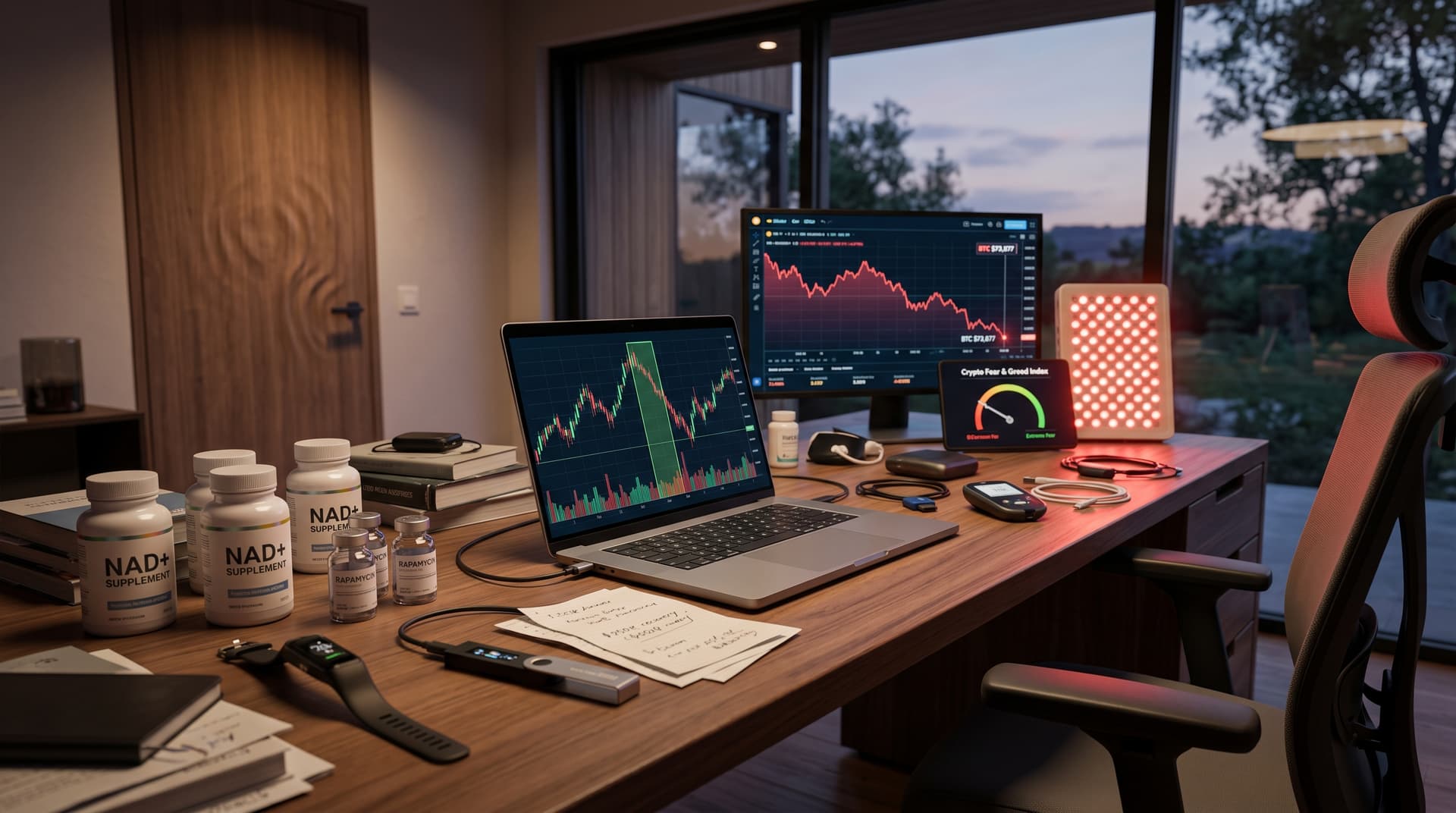
Cold exposure displays show core temperature drops. Sauna sessions overlay hydration status. Red light therapy tracks 660nm doses.
IEEE Spectrum reports a 50-person wrist prototype trial. Visual cues boosted adherence 15%.
Displays project longevity trends like NAD+ levels. Users detect senescence early. Caloric restriction visualizes deficits. Caveat: Human trials remain preclinical; mouse data (n=24, Nature Aging 2025) shows promise in biomarker visualization.
Technology Finance Accelerates MEMS Adoption
Venture capital invested $1.2B in AR optics in Q1 2026 (Bloomberg). MEMS startups captured 22%.
MicroVision holds $450M market cap. Shares rose 4% on April 13, 2026.
AR display market reached $8.5B in 2026 (Statista). Forecasts predict 28% CAGR to 2030. Implantables target 5% share by 2028.
Biocompatibility Clears Implant Hurdles
Titanium encapsulation protects the MEMS array chip. FDA cleared similar sensors for pacemakers. Coatings reduce rejection below 1%.
Body heat harvesting powers 5-year operation. Inductive charging penetrates 1cm skin depth.
Heat limits brightness to 100 nits. Stanford tests hydrogel lenses for outdoor use.
Mass Production Scales MEMS Array Chips
TSMC's 5nm node achieves high yields. Costs drop to $15 per chip at volume.
Biohacking clinics test prototypes. Early implants cost $5,000. Insurance covers diagnostics by 2030.
Regulatory paths mirror CGMs. Dexcom gained FDA approval after 2-year trials. MEMS chips pursue Phase I clearance.