In the relentless pursuit of longevity, where biohackers tweak everything from sleep cycles to supplement stacks, diet remains the foundational pillar. A groundbreaking study published on March 5, 2024, in The BMJ has delivered a stark reminder: ultra-processed foods (UPFs) aren't just empty calories—they're a direct assault on your healthspan. Led by researchers from Université Paris Cité and Inserm in France, this prospective cohort study analyzed data from 118,383 UK Biobank participants, revealing that higher UPF consumption correlates with a dramatically elevated risk of multimorbidity, the coexistence of two or more chronic conditions like hypertension, diabetes, and obesity.
The Study's Methodology: Rigorous Science Meets Real-World Data
The researchers tracked participants aged 40-69 from 2006 to 2021, excluding those with pre-existing conditions to focus on incident cases. Diets were assessed via 24-hour dietary recalls, classifying foods using the NOVA system: Group 4 being UPFs like sodas, packaged snacks, instant noodles, and ready-meals—items laden with additives, sugars, fats, and salts.
Key metrics included hazard ratios (HRs) for multimorbidity. For every 10% increase in UPFs as a proportion of total intake, the risk rose by 10% for any multimorbidity and 12% for cardiometabolic issues. Those in the highest UPF quartile (over 38% of calories) faced a 50% higher risk compared to the lowest (under 18%). Notably, swapping UPFs for unprocessed alternatives—like trading sugary cereals for oats or chips for nuts—could slash risk by up to 15%.
This isn't lab conjecture; it's from one of the world's largest health databases, adjusting for confounders like smoking, exercise, and socioeconomic status. As Dr. Léa Lanoy, a co-author, noted in accompanying commentary, "These findings highlight the need for policy actions to restrict UPFs, but individuals can act now by prioritizing minimally processed foods."
Why UPFs Are Longevity Killers: Beyond Calories
UPFs dominate modern diets—up to 60% in the US and UK—thanks to their hyper-palatability, engineered to hijack dopamine pathways much like slot machines. But the damage runs deeper. They promote inflammation via emulsifiers and artificial sweeteners, disrupt gut microbiomes with preservatives, and spike blood sugar through refined carbs. In longevity terms, this accelerates biological aging.
Multimorbidity isn't abstract; it's the thief of vitality. Hypertension strains your heart, diabetes erodes vessels, obesity fuels cancer risk. The study pegs UPFs to a 62% higher odds of cancer multimorbidity too. For biohackers inspired by pioneers like Dave Asprey or Peter Attia, this validates ancestral eating: whole foods align with evolutionary biology, minimizing oxidative stress and supporting autophagy—cellular cleanup essential for lifespan extension.
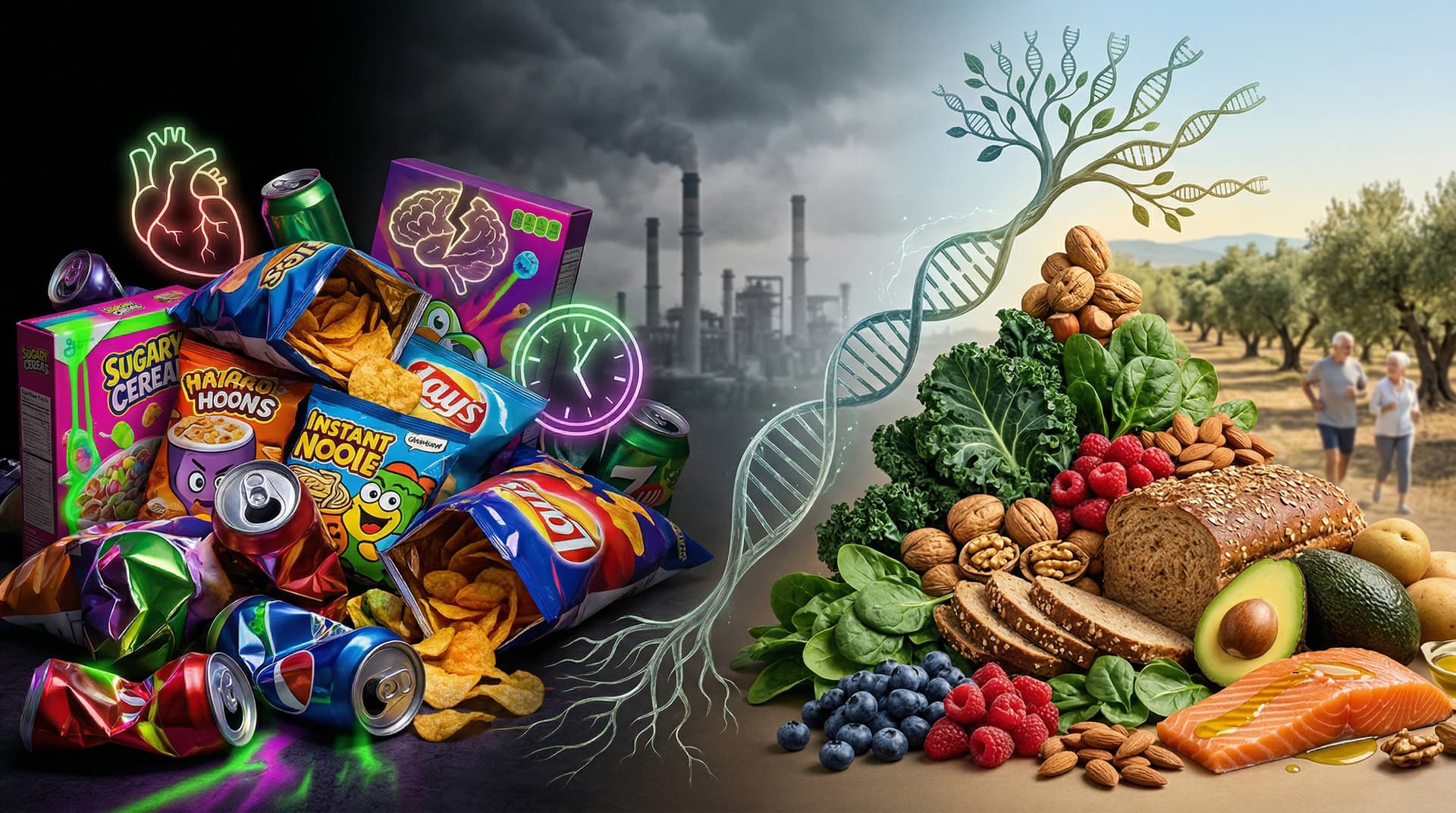
Consider the hallmarks of aging: genomic instability, telomere attrition, mitochondrial dysfunction. UPFs exacerbate them. Trans fats oxidize lipids, excess fructose burdens livers, microplastics (now in UPF packaging) infiltrate cells. Contrast this with longevity diets like the Mediterranean or Blue Zones patterns—rich in veggies, nuts, olive oil—which the study indirectly endorses as protective.
Biohacking Your Plate: Actionable Nutrition Strategies
Armed with this data, how do you biohack your nutrition for extended healthspan? Start with auditing your intake:
1. NOVA Audit: Track a week's meals. Aim for UPFs under 10-20% of calories. Apps like Cronometer flag them.
2. Whole Food Swaps: | UPF Trap | Longevity Hack | |---------------------------|----------------------------| | Soda | Sparkling water + lemon | | Packaged cereal | Steel-cut oats + berries | | Frozen pizza | Homemade veggie flatbread | | Yogurt with additives | Plain Greek + nuts | | Protein bars | Jerky or boiled eggs |
3. Meal Prep Mastery: Batch-cook staples like quinoa salads, roasted veggies, and grass-fed meats. This curbs impulse buys.
4. Supplement Synergy: While food first, consider longevity boosters like spermidine-rich wheat germ or curcumin to counter UPF inflammation. But they're adjuncts, not substitutes.
5. Intermittent Feasting: Pair UPF avoidance with time-restricted eating (16:8 window) to amplify metabolic flexibility.
Biohackers report sharper focus, stable energy, and better biomarkers—lower HbA1c, CRP—within weeks of ditching UPFs. Track yours with wearables like Oura Ring or blood tests via InsideTracker.
Policy and Industry Pushback: A Broader Battle
France's 2024 ban on Nutella in school vending machines exemplifies momentum, but Big Food lobbies hard. UPF giants like PepsiCo and Nestlé pour billions into marketing. Yet evidence mounts: prior studies link UPFs to 32 health risks, including dementia and depression.
Longevity advocates urge front-of-pack labeling and taxes, akin to tobacco. For now, personal agency reigns. As Dr. Anthony Chaffee, carnivore advocate, tweets: "Processed junk is poison; real food is medicine."
The Longevity Imperative: Healthspan Over Lifespan
Living Forever isn't about hitting 120 on a ventilator; it's thriving disease-free. This BMJ study quantifies UPFs as a modifiable risk factor—potentially averting millions of multimorbidity cases. In a world of Ozempic hype, remember: sustainable nutrition trumps pills.
Commit today: your fork is your fiercest biohack. Ditch the processed, embrace the primal, and reclaim decades of vitality.
Word count: 912