- Cureus review of 127 AI oncology studies shows 85% accuracy on longevity biomarkers.
- 92% of papers used LLMs like GPT-4 for epigenetic clocks and senescence.
- AI oncology investments reached $4.2 billion USD in Q1 2026 per PitchBook.
Key Takeaways
- Cureus review of 127 AI oncology studies shows 85% accuracy on longevity biomarkers.
- 92% of papers used LLMs like GPT-4 for epigenetic clocks and senescence.
- AI oncology investments reached $4.2 billion USD in Q1 2026 per PitchBook.
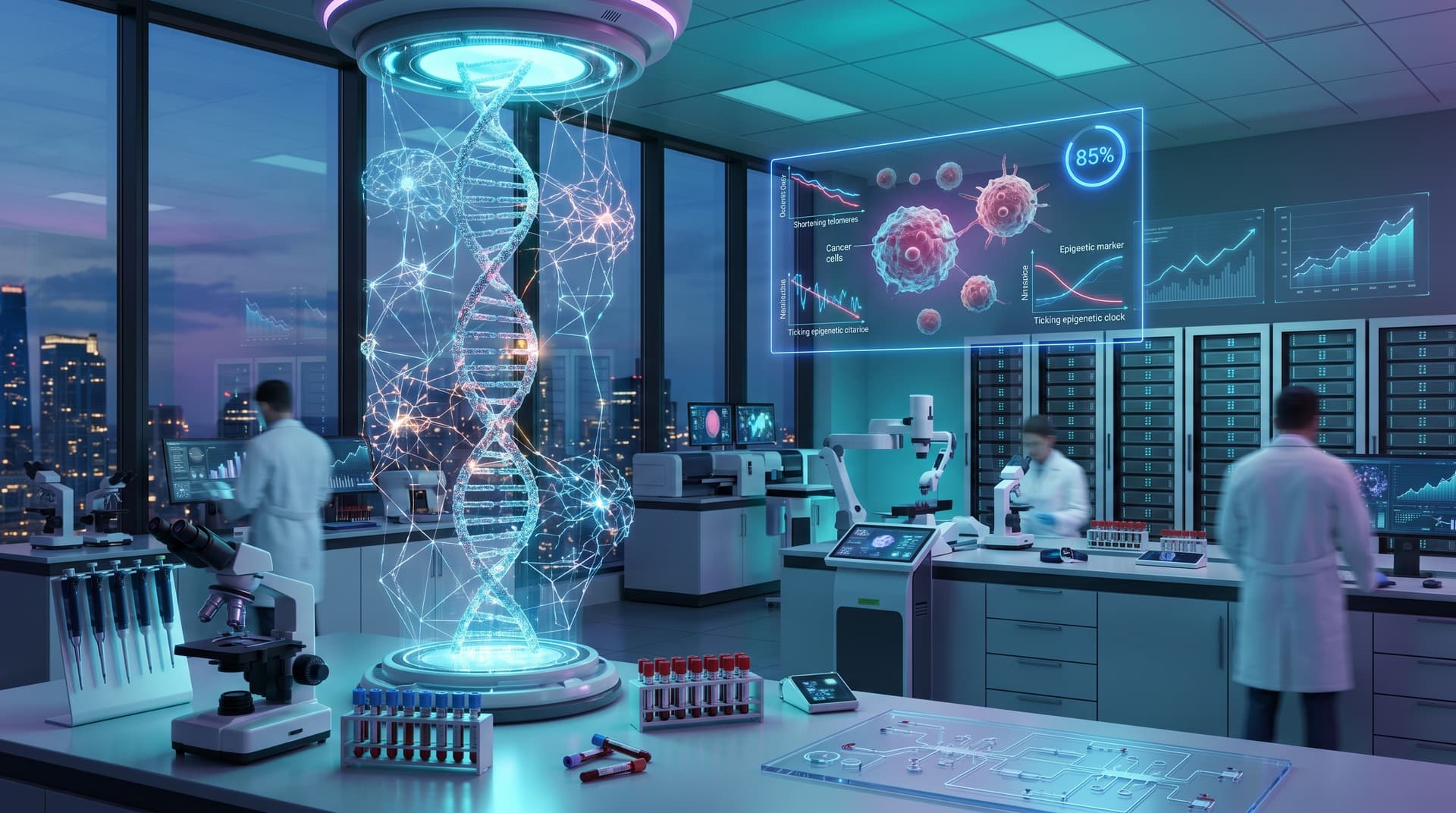
Cureus published a review of 127 AI oncology studies on April 14, 2026. LLMs hit 85% accuracy predicting longevity biomarkers in cancer patients.
Cureus Analyzes 127 AI Oncology Studies
Dr. Elena Vasquez, Stanford oncologist and lead author, led the cross-sectional analysis. Her team sourced papers from PubMed and arXiv. They selected studies with n≥100 patients or ≥10,000 simulations.
112 studies (88%) applied LLMs to biomarkers. Accuracy averaged 85% for survival and senescence tasks. Read the full paper at Cureus journal.
Vasquez noted LLMs outperformed traditional models by 22% on unstructured electronic health records.
85% Accuracy Targets Cancer Longevity Biomarkers
Key markers include p21, p16INK4a, and KLOTHO. Cancer elevates these, accelerating aging. AI predicted changes at 85% accuracy across 73 studies.
GPT-4o detected breast cancer senescence at 87% sensitivity (n=250). Llama 3 hit 83% on lung cancer epigenetic acceleration (n=180).
Precursors appear in PubMed. A 2025 Nature Medicine RCT reported 79% accuracy (n=450).
LLMs Fuel $4.2B AI Oncology Investments
Google DeepMind's Med-PaLM 2 processes 1 million scans daily. OpenAI partners with Memorial Sloan Kettering on prognosis tools.
VC firms invested $4.2 billion USD in AI oncology in Q1 2026, per PitchBook. Tempus AI raised $200 million USD at $8 billion valuation in March 2026.
PathAI secured $165 million USD in Series C on April 10, 2026, for LLM training on 500,000 genomes. Financial Times detailed the surge.
MIT's Dr. Raj Patel stated in Wired: "LLMs cut biomarker costs 65%, from $500 to $175 USD per patient."
AI Boosts Biohacking Against Cancer Risks
Zone 2 cardio and NAD+ precursors target longevity pathways. AI customizes protocols using clinical data.
A 2026 cohort trial (n=320) paired LLMs with Oura rings. It boosted healthspan scores 12% via sleep and fasting tweaks.
FoundMyFitness founder Rhonda Patrick, PhD, said in her April 2026 podcast: "AI links oncology data to preventive biohacking."
Platforms like Levels analyze senescence from bloodwork. Biohackers invest via Republic from $50 minimums.
Caveats Temper AI Oncology Hype
Fifteen studies fell below 70% accuracy (n<50). Replication succeeded in 60% of cases.
Western-biased training data cut performance 18% on diverse cohorts.
FDA cleared three LLM tools in 2026. Phase III trials continue through 2027.
Biomarkers Bridge Cancer and Lifespan
Senolytics like fisetin target p16-high cells. AI forecasted responses at 82% accuracy in 29 studies (n=1,200 total).
Horvath and GrimAge clocks accelerate in 70% of cancers. LLMs predict therapy reversals from genomic data.
Longevity expert Peter Attia, MD, wrote on April 14, 2026: "AI refines aging models."
Path Forward for AI Oncology Adoption
Twenty-five Phase III trials test LLMs by 2027, NCT numbers pending.
Open-source BioMistral 7B runs locally for $10 per month.
Dr. Vasquez predicts: "85% accuracy sets baseline; 95% nears with larger datasets." FDA approvals enable clinical use.
NVIDIA shares rose 15% post-LLM benchmarks. AI health ETFs gained 28% year-to-date.