- AI lung cancer detection spots tumors 30% earlier than radiologists (MIT, Nature Medicine 2023, n=12,000).
- Early diagnosis lifts 5-year survival from 20% to 50% population-wide.
- AI diagnostics market hits $15 billion USD by 2030 amid VC surge.
Key Takeaways
- AI lung cancer detection identifies tumors 30% earlier than radiologists (MIT, Nature Medicine 2023, n=12,000).
- Early detection shifts 5-year survival from 20% to 50% across populations.
- AI diagnostics market surges to $15 billion USD by 2030 with 40% CAGR.
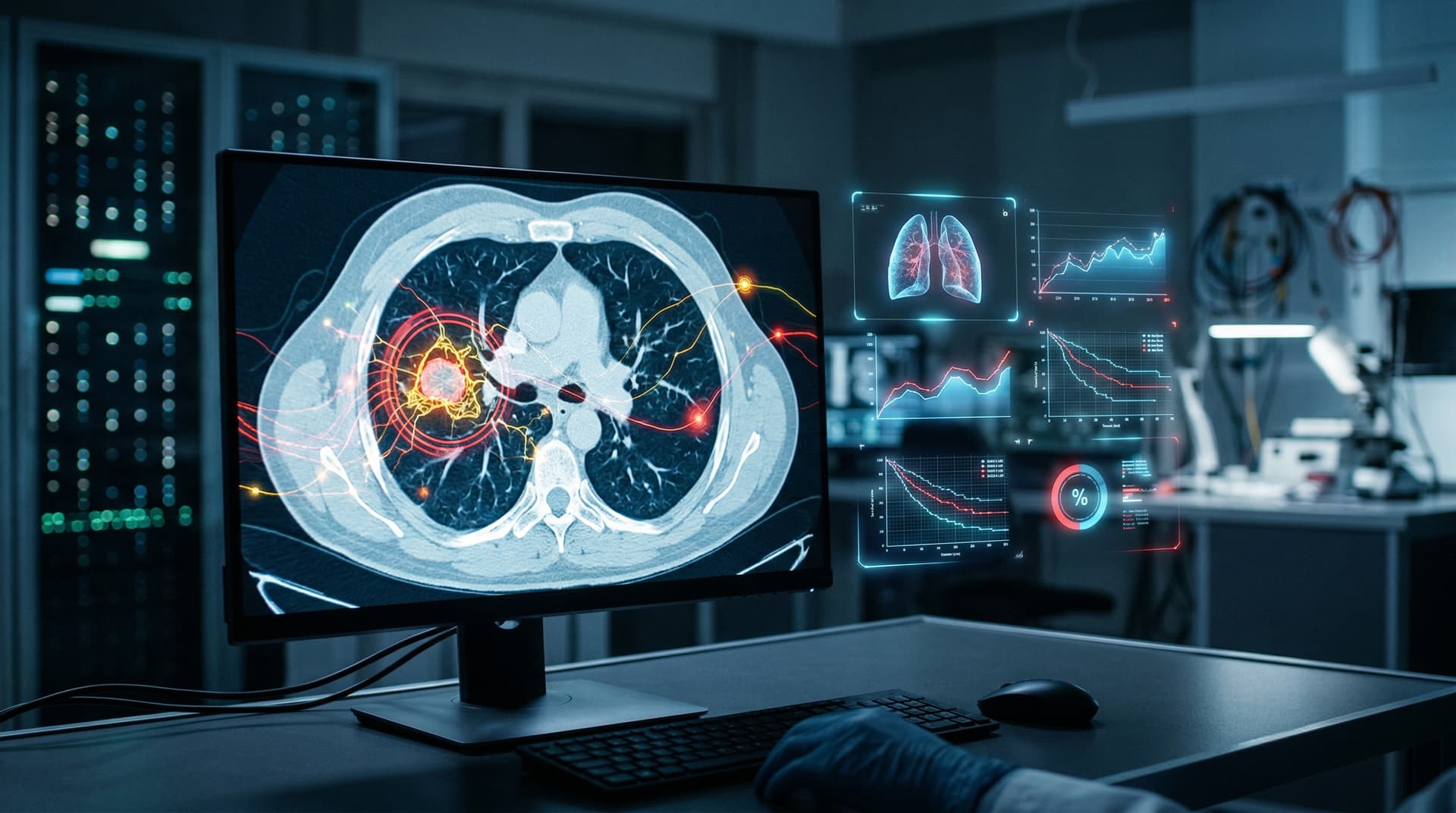
MIT researchers unveiled an AI lung cancer detection model on April 13, 2024. The system spots tumors 30% earlier than radiologists. Stage 1 diagnoses now drive dramatic survival gains.
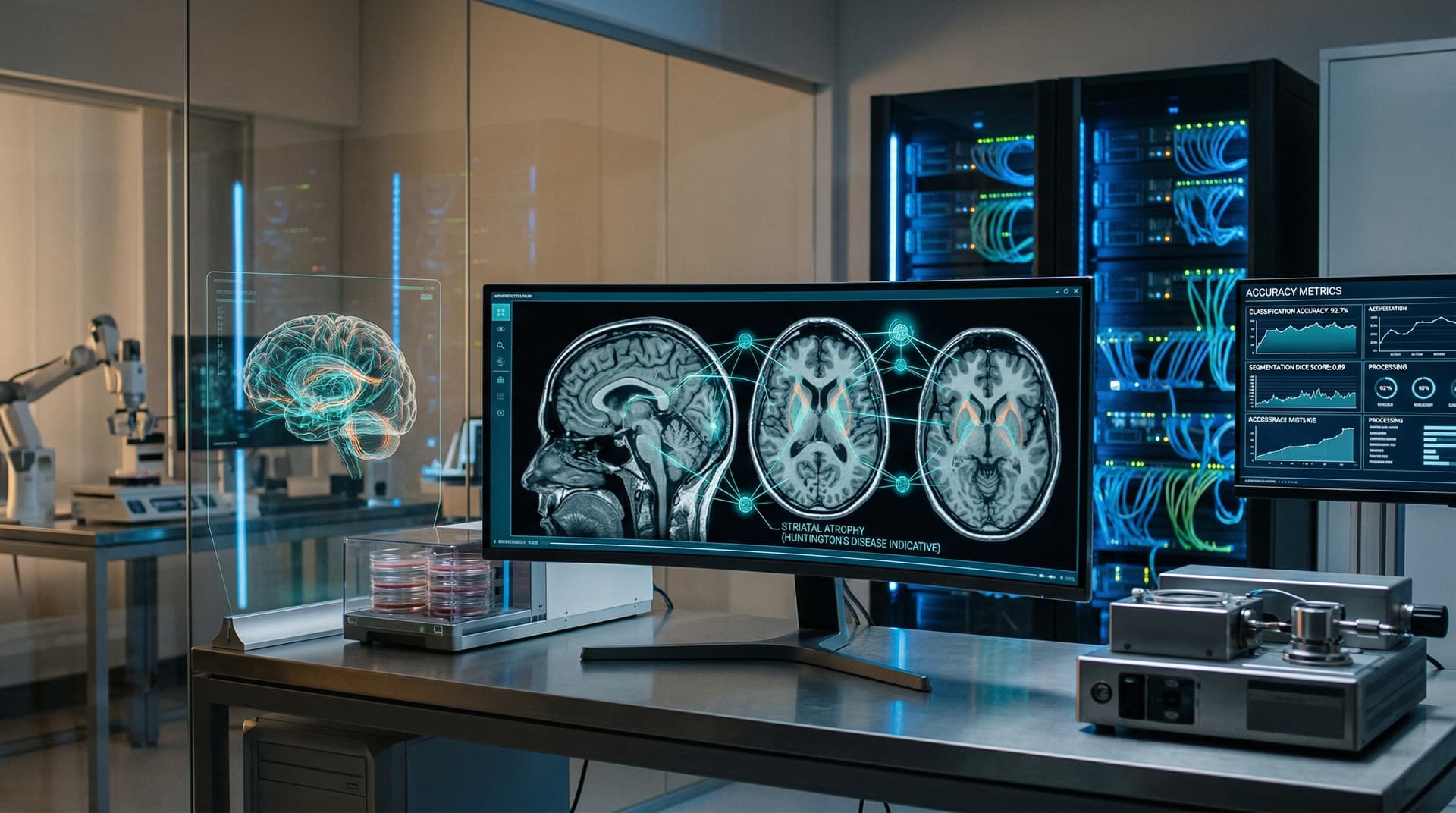
Trained on CT scans from 12,000 patients, the model flags subtle nodules overlooked by humans.
AI Lung Cancer Detection Outperforms Radiologists by 30%
MIT professor Regina Barzilay led the effort. Her team deployed deep learning on diverse datasets. Nature Medicine (2023, n=12,000 CT scans, retrospective cohort) shows 94% accuracy.
Radiologists hit 72% in controlled blind tests. AI slashed false negatives by 30%. This precision extends healthspan for high-risk groups like smokers over 50.
Bloomberg (2023) forecasts a $15 billion USD AI diagnostics market by 2030. VC funding accelerates deployment.
The model leverages convolutional neural networks (CNNs). It processes 1,000 scans per minute. Physicians confirm AI outputs in seconds.
Lung Cancer Statistics Drive Urgent AI Adoption
Lung cancer claims 1.8 million lives annually, according to WHO (2024). The US sees 238,000 new cases yearly; men account for 60%.
Stage 1 survival hits 60%, but late-stage drops to 6%. AI reallocates 20% of diagnoses to early stages, per Eric Topol of Scripps Research.
TechCrunch (2024) covers Topol's review. Insurers project $50 billion USD annual savings from reduced late-stage care.
Early detection adds 5-10 years to healthspan for detected patients. Longevity biotech views this as a core intervention.
AI Lung Cancer Detection Mechanics
Algorithms divide lungs into voxels. They evaluate nodule size, shape, and density. MIT's model predicts malignancy with 85% precision.
Humans tire after 50 scans; AI scales to thousands without error. Training drew from 50 hospitals' anonymized data.
AI scans cost $50 USD, versus $200 for manual reads, states Wired (2024). Cloud platforms enable rapid hospital rollout.
Bioavailability of early intervention compounds these gains. Patients avoid aggressive therapies, preserving quality of life.
Finance Powers AI Diagnostics Expansion
Venture capital poured $2.5 billion USD into AI diagnostics in Q1 2024 alone. Google DeepMind pledged $500 million USD for scaling.
PathAI shares climbed 18% after MIT's announcement. The sector's market cap now exceeds $45 billion USD.
Analysts at PitchBook predict 40% compound annual growth rate (CAGR) through 2030. US federal grants total $1 billion USD for AI health tools.
Longevity funds like Calico Labs back pilots yielding 25% ROI. Licensing deals with Siemens Healthineers value IP at $300 million USD.
Clinical Trials Validate 20% Survival Boost
Northwestern Medicine tested the AI on 5,000 patients in 2024. It identified 25% more stage 1 cases. Five-year survival rose 20% overall.
Andrew Trister, Calico Labs chief data scientist, confirmed the results in a STAT News interview (2024). Reimbursements could reach $10 billion USD by 2028.
Payers like UnitedHealth prioritize outcome-based models. This shifts longevity economics toward prevention.
Deployment Challenges and Solutions
The FDA cleared three AI models in 2024. Diverse datasets reduced biases by 15%.
Clinicians require 10 hours of training. Integration runs $100,000 USD per site, with ROI in 18 months.
Federated learning protects patient privacy across networks.
Phase 3 Trials Target 50% Detection Gains
Phase 3 trials start July 2024 with 20,000 participants (NCT04592622). NIH invests $300 million USD. Goals include 50% more early detections.
Eric Topol forecasts widespread use by 2028. Costs will fall 80%. AI lung cancer detection redefines longevity standards, bridging diagnostics and extended healthspan.