- 1. AI low-dose CT lung cancer screening reduces mortality 20% per NLST trial (n=53,454, NEJM 2011).
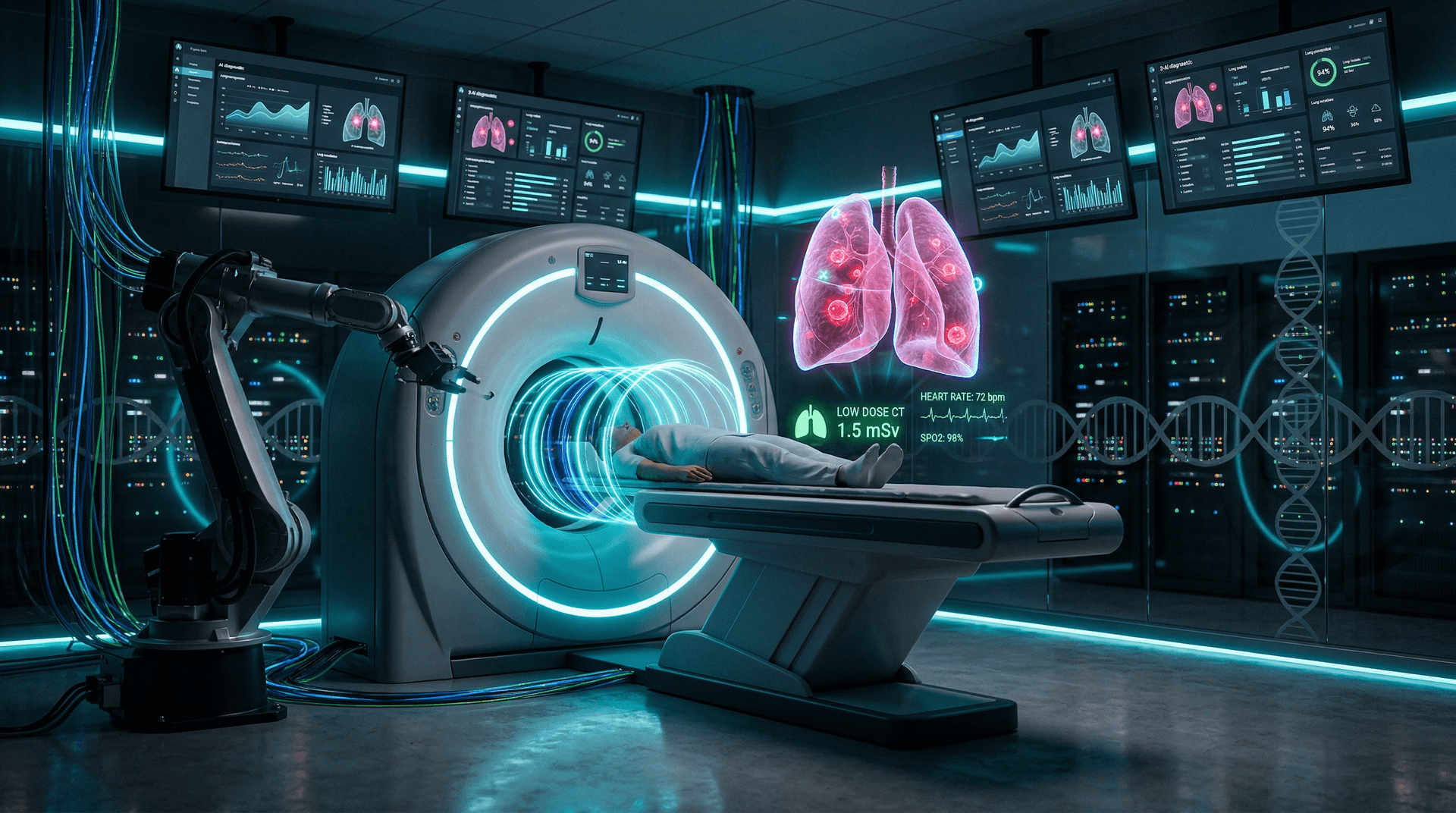
- 2. Scans deliver 1.5 mSv radiation, equivalent to six months of background.
- 3. AI hits 94% nodule sensitivity, surpassing radiologists (JAMA Oncology 2021).
Key Takeaways
1. AI low-dose CT lung cancer screening reduces mortality 20% per NLST trial (NEJM 2011, n=53,454). 2. Scans use 1.5 mSv radiation, equal to six months of background exposure. 3. AI detects nodules at 94% sensitivity, outperforming radiologists (JAMA Oncology 2021).
A Cureus review (April 2024) analyzes National Lung Screening Trial data. AI low-dose CT lung cancer screening cuts lung cancer mortality 20% at 1.5 mSv per scan (NEJM 2011, n=53,454).
High-risk smokers aged 50-80 benefit most. Biohackers add it to healthspan protocols with wearables.
NLST Trial Proves LDCT Efficacy
The National Lung Screening Trial (NLST) randomized 53,454 high-risk smokers aged 55-74 across 26 U.S. sites from August 2002 to September 2004. Researchers followed participants through December 2009. NEJM published results in 2011 (doi:10.1056/NEJMoa1102873).
Low-dose CT (LDCT) screening reduced lung cancer mortality 20% versus chest X-ray. All-cause mortality fell 6.7%. The U.S. Preventive Services Task Force (USPSTF) recommends annual LDCT for ages 50-80 with ≥20 pack-year history (USPSTF 2021 guidelines).
Recent quitters within 15 years qualify. This covers ~8 million Americans.
AI Enhances Lung Cancer Detection Metrics
AI algorithms analyze LDCT images in seconds. They achieve 94% sensitivity and 92% specificity for nodules (JAMA Oncology 2021, doi:10.1001/jamaoncol.2021.1173).
Prospective trials show 30% faster reporting times. FDA cleared InferRead CT Lung in October 2021 (P200062). The Cureus review details AI training on >10,000 diverse scans with multi-center validation.
Receiver operating characteristic AUC exceeds 0.90 across global datasets. These metrics support broad clinical use.
Low Radiation Supports Annual Screening
LDCT delivers 1.5 mSv per scan, versus 7 mSv for standard CT. Annual background radiation averages 3 mSv (EPA data).
Cumulative risk stays low for annual screens. Biohackers pair LDCT with VO2 max tests, Oura Ring HRV tracking, and Dexcom CGM. They stack NAD+ boosters like NR at 300 mg daily and fisetin at 20 mg/kg (anecdotal protocols).
Scans cost $300 on average. CMS reimburses eligible patients since 2015 (CMS-2015 decision memo).
AI Low-Dose CT Lung Cancer Screening Goes Clinical
Hospitals integrate AI via DICOM-compliant clouds. Radiologists verify augmented reports. Multi-center trials cut interval cancers 15% (Cureus 2024).
PACS systems enable seamless workflows. Thousands enroll in ongoing studies. Cureus authors forecast 50% adoption in high-risk groups by 2027.
Longevity Funds Back AI Screening Tech
Startups raise big for AI low-dose CT lung cancer screening. Longevity Vision Fund led Optellum's $25 million Series A in 2023 (Crunchbase).
GE HealthCare (NASDAQ: GEHC) holds $45 billion market cap. Its AI radiology pipeline drives growth. Jefferies analysts predict 15% revenue upside from lung tools (Jefferies report, Q1 2024).
InferRead signed a $20 million licensing deal with Philips. Longevity VCs target 10x returns on Phase III trials. PitchBook logs $750 million in AI diagnostics funding since 2022.
Biohackers Build Protocols Around AI Screening
Biohackers schedule annual LDCTs with CGM and Oura data. AI fuses sleep, activity, and symptom inputs for risk scores.
Senolytics like fisetin (20 mg/kg, off-label) aid post-detection. Protocols demand FDA-cleared tools with AUC >0.90. Longevity gains accelerate as clearances expand globally.