- AI in cytology achieves 94.1% sensitivity for urothelial carcinoma, topping pathologists' 82.4%.
- Systems detect cervical cell abnormalities with 98.5% accuracy.
- Early cytology detection raises localized cervical cancer 5-year survival to 92%.
Key Takeaways
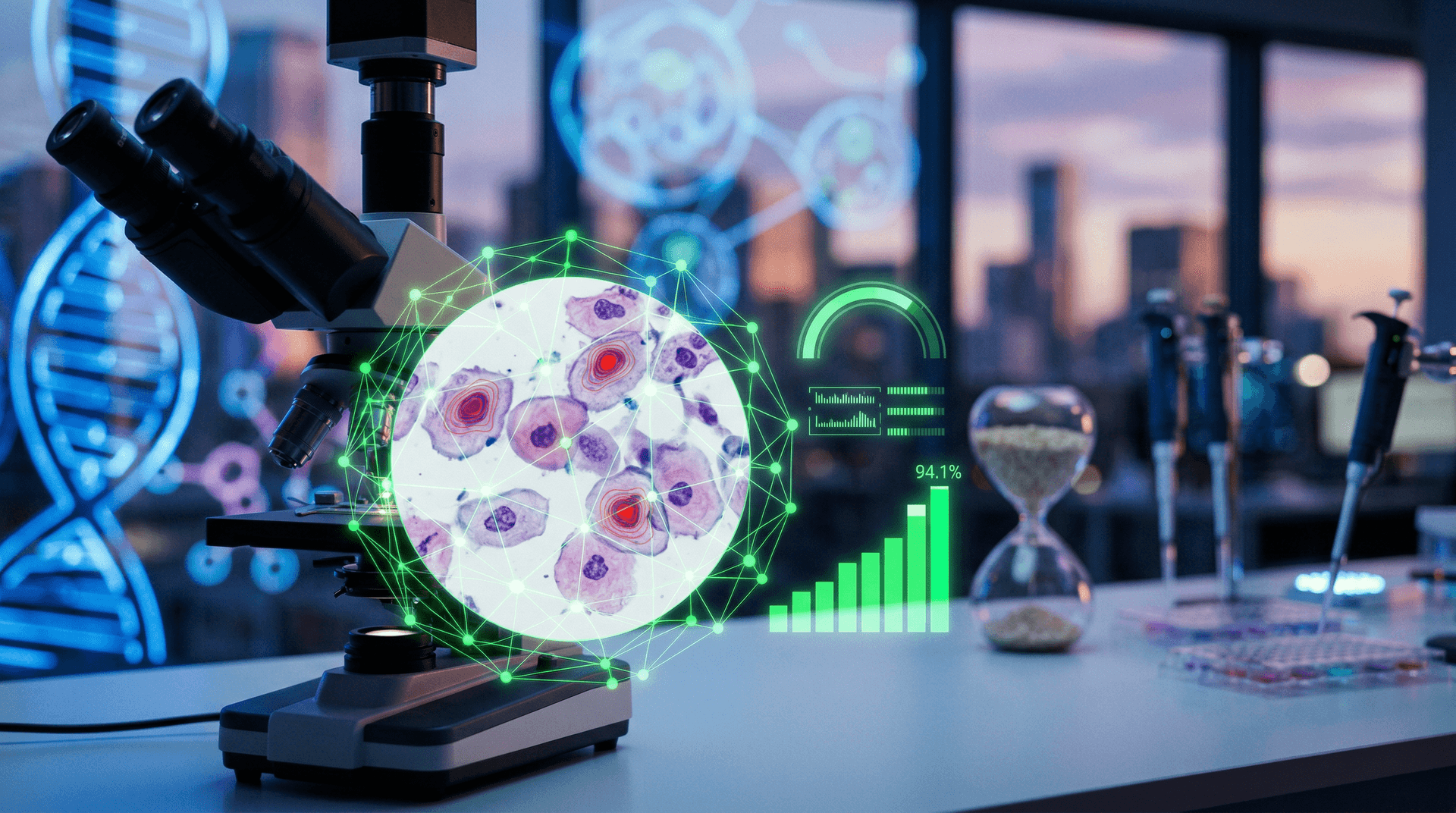
- AI in cytology achieves 94.1% sensitivity for urothelial carcinoma, topping pathologists' 82.4%.
- AI systems detect cervical cell abnormalities with 98.5% accuracy.
- Early cytology detection raises localized cervical cancer 5-year survival to 92%.
AI in cytology achieves 94.1% sensitivity for urothelial carcinoma detection, surpassing pathologists' 82.4%, per a 2022 Cancer Cytopathology study. This precision enables early interventions that extend healthspan.
Cytology examines cells from bodily fluids or smears to diagnose cancer, including bladder and cervical types. Pathologists review Pap smears and urine cytology slides manually. AI in cytology accelerates analysis and spots subtle abnormalities missed by humans.
Researchers train deep learning models on vast image datasets from clinical archives. Convolutional neural networks (CNNs) identify patterns in stained cells, such as irregular nuclei or chromatin clumping. These systems process thousands of images per minute with consistent results.
AI in Cytology Outperforms Pathologists in Urine Samples
A 2022 Cancer Cytopathology study tested AI on urine cytology samples for urothelial carcinoma, a prevalent bladder cancer. The AI model delivered 94.1% sensitivity (n=1,369 samples), while six experienced pathologists averaged 82.4%.
AI minimized false negatives by confidently flagging atypical urothelial cells. Clinicians deploy AI for triage, prioritizing high-risk cases for rapid review.
Pathologists focus first on AI-flagged slides. Turnaround time drops from days to hours, accelerating diagnosis and treatment.
Cervical Cytology Accuracy Reaches 98.5%
A 2022 Frontiers in Medicine analysis assessed AI on Pap smears for cervical abnormalities. The system achieved 98.5% accuracy (n=10,000+ images) in detecting precancerous lesions.
Traditional pathologist readings vary from 70-80% due to subjectivity and fatigue. AI standardizes results across labs and complements HPV DNA testing for better specificity.
Early detection halts progression to invasive cancer, preserving years of healthspan.
Early Detection Drives Survival and Healthspan
SEER data from the National Cancer Institute shows 92% five-year survival for localized cervical cancer (n=13,000+ cases annually), dropping to 19% for distant metastases.
AI in cytology shifts more cases to early stages. Precancerous and senescent cells serve as aging biomarkers; detecting them informs longevity protocols like senolytics.
Biohackers track these markers with wearables and blood tests for full profiles.
Neural Networks Master Cell Morphology
AI quantifies nucleus size, shape, cytoplasm ratios, and chromatin patterns with sub-micron precision. Machines avoid human variability from training or shift differences.
Global labs provide annotated datasets for training. Transfer learning adapts models to new staining protocols; edge computing runs inference on lab hardware.
Open-source frameworks like TensorFlow enable customization for thyroid, lung, or breast cytology applications.
Finance: Longevity Funds Back AI Cytology Startups
Venture capital pours into AI cytology platforms. Startups offer FDA-cleared tools via SaaS subscriptions to labs, projecting $20M+ ARR at scale.
Longevity biotech funds target these for healthspan ROI. PitchBook data reports $2.9B in AI diagnostics deals in 2023, with medtech valuations averaging 15x revenue multiples.
Stable cash flows from screening volumes draw capital despite market volatility.
FDA Clears Path for AI Cytology Devices
FDA approves AI cytology as Class II devices after prospective trials. Paige.AI earned breakthrough status in 2021; Europe grants CE marks faster.
Diverse datasets from multiple ethnicities reduce bias. Federated learning allows hospitals to train collaboratively without data sharing.
Cloud integration lets small labs access enterprise-grade AI, cutting equipment costs by 70%.
Action Steps for Biohackers and Clinicians
Clinicians integrate validated AI apps into workflows for slide triage. Biohackers submit anonymized cytology samples to monitor cellular aging trends.
Combine with blood tests for inflammation (hsCRP, IL-6). Lifestyle interventions like sauna therapy or time-restricted feeding improve cytology markers.
- Establish yearly AI cytology baselines.
- Incorporate Zone 2 cardio for vascular resilience.
- Track via CGMs and Oura rings.
Multimodal AI in Cytology Shapes Future Longevity
Next-gen AI merges cytology with genomics, proteomics, wearables, and EHRs. Precision nears 99% via ensemble models. Real-time alerts personalize interventions.
Routine screens evolve into dynamic longevity dashboards. AI in cytology drives predictive healthspan optimization.