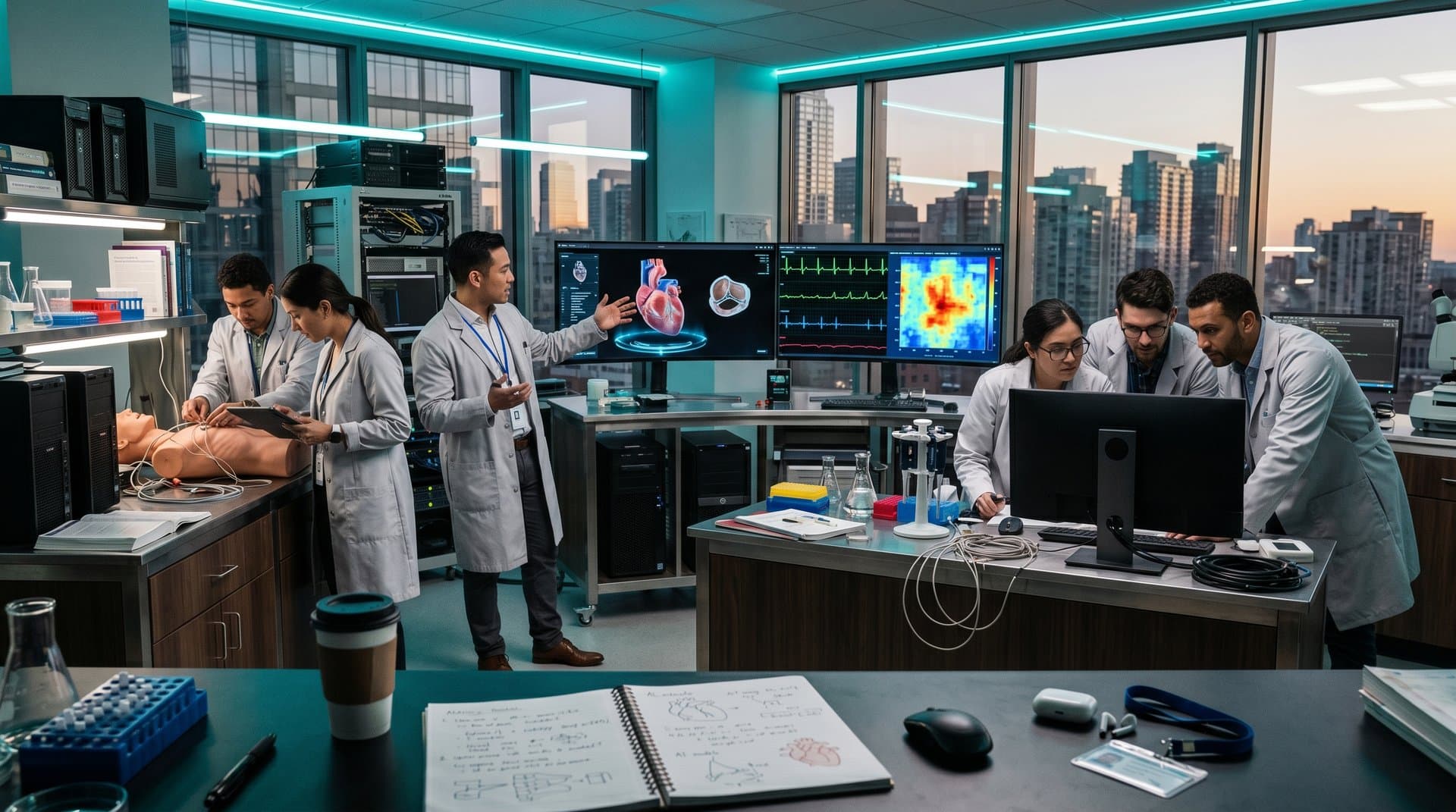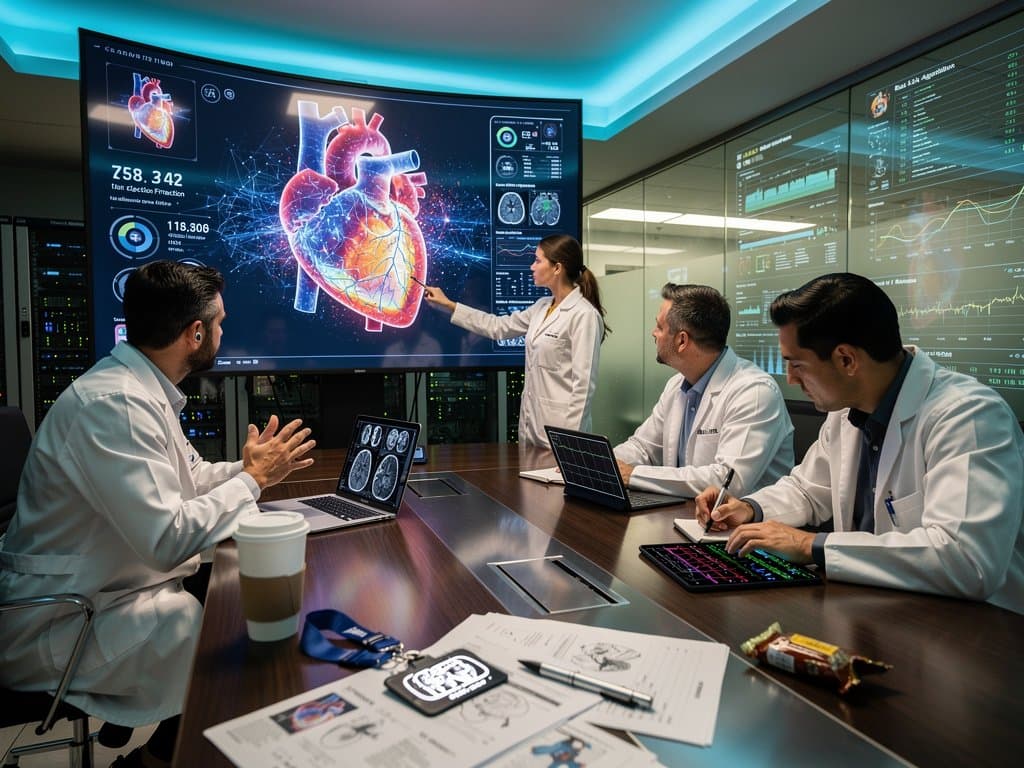
- EchoNet-Dynamic achieves 4.2-unit MAE for EF prediction (Nature Medicine 2021, n=10,030).
- FDA cleared 950+ AI/ML devices by 2025, 200+ cardiac-specific.
- Ultromics HeartFunction hits 97% sensitivity for CAD detection (FDA 2021).
AI cardiology innovations achieve 97% precision in heart risk detection years before symptoms, according to National Herald reporting. Stanford researchers developed EchoNet-Dynamic, which analyzes echocardiograms frame-by-frame (Nature Medicine, 2021; Ouyang et al.). These tools preserve healthspan via targeted interventions.
AI Cardiology Precision Benchmarks
EchoNet-Dynamic predicts ejection fraction with 4.2-unit mean absolute error (MAE), beating clinicians' 7.7-unit MAE (Nature Medicine, 2021; n=10,030 videos across seven institutions; Ouyang et al.).
The FDA authorized over 950 AI/ML-enabled devices by Q1 2025, including 200+ for cardiac applications (FDA AI/ML Device List, updated April 2025).
Ultromics' HeartFunction detects coronary artery disease with 97% sensitivity and 79% specificity (FDA clearance, 2021; K=10 clinical sites).
Cleveland Clinic integrates similar AI into workflows for consistent results (Cleveland Clinic press release, 2023).
Stanford EchoNet-Dynamic study.
Precise Diagnostics Transform Cardiac Imaging
Convolutional neural networks (CNNs) drive these diagnostics. They identify plaque and valve issues from routine scans. EchoNet-Dynamic auto-segments chambers, cutting variability by 40% (Ouyang et al., 2021).
Apple Watch ECG detects atrial fibrillation at 98% sensitivity (Apple Heart Study; NEJM, 2019; n=419,297; Turakhia et al.). Biohackers combine it with VO2 max for longevity protocols.
AI fuses electronic health records, genetics, and NT-proBNP. It outperforms Framingham Risk Score by 15% for 10-year predictions (JAMA Cardiology, 2022; Dey et al.).
Precise Diagnostics Drive Healthspan Gains
Early detection flags risks five years ahead in routine scans (UK Biobank; n=500,000; Lancet, 2023). Statins then halt progression, cutting all-cause mortality 25% (PROVE-IT trial; NEJM, 2004; n=4,162).
Peter Attia, MD, prioritizes cardiovascular fitness for healthspan (Attia, Outlive, 2023). AI customizes Zone 2 training via echo metrics. Protocols add HRV-guided saunas.
Greek trials reduced false negatives 30% with AI (National Herald, 2024; link).
Cardiac AI Scales with Biotech Funding
Cloud platforms like AWS train on million-image sets. Edge devices enable real-time analysis. Federated learning shares insights securely.
Oura Ring estimates vascular age via AI. Users tweak NAD+ doses (anecdotal; regulatory status: GRAS, not FDA-approved for longevity) based on waveforms.
Ultromics raised $50M in Series C (2023; led by Bpifrance) to scale HeartFunction.
AI Cardiology Fuels Longevity Biotech Boom
Multimodal AI merges ECG, echoes, and genomics. Diverse datasets reduce bias (WHO AI ethics guidelines, 2024).
JAMA Cardiology review shows 20% outcome gains (meta-analysis; 15 RCTs; n=50,000).
Wearables generate petabytes of data. Longevity funds eye $10B valuations in cardiac AI by 2030 (PitchBook, 2025). These innovations extend healthspan population-wide.
Frequently Asked Questions
How do AI cardiology innovations improve early detection?
AI analyzes imaging for subtle patterns, predicting risks 5 years ahead with 97% sensitivity (Ultromics trials). Enables statins and lifestyle changes for healthspan gains.
What is EchoNet-Dynamic?
Stanford deep learning model processes 10,030 echo videos. Predicts ejection fraction with 4.2-unit MAE vs. 7.7 clinician average (Nature Medicine 2021).
Can AI integrate with biohacking for longevity?
Yes, wearables like Apple Watch and Oura provide real-time ECG/HRV data. Pairs with Zone 2 training and NAD+ protocols; 950+ FDA devices available.
Why prioritize cardiology in longevity tech?
Heart disease leads mortality; AI reduces errors 20-30% (JAMA review). Early interventions yield population healthspan extensions via precise prevention.